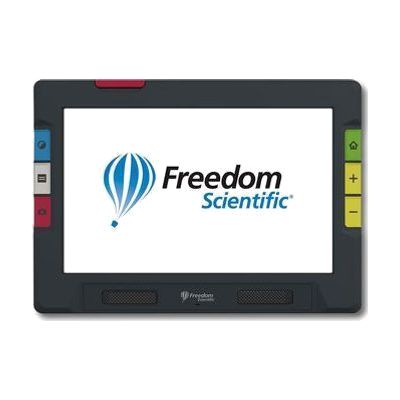
RUBY 10
Price is what the vendor listed when last checked. Confirm it with the vendor before buying.
Last verified September 16, 2026 · classified April 26, 2026
What it is
Summary
AI-generated from vendor-published content · April 26, 2026
The RUBY 10 is a desktop video magnifier with a 10-inch touchscreen that uses three separate cameras to handle different viewing tasks: one for reading flat materials like books and labels, a swing-out arm camera for viewing objects you're holding or for writing, and a third camera aimed forward for reading signs or menus at a short distance. It's designed for someone with low vision who needs magnification across a range of daily tasks — not just reading at a desk, but also writing checks, reading pill bottles, or spotting a restaurant menu across the room. The speech-enabled model adds OCR (optical character recognition), which can scan a full page and read it aloud, making it a more complete solution for people who find reading even magnified text tiring. This is a standalone, all-in-one device — no computer or additional software is required — but the three-camera system and touchscreen interface benefit from a brief orientation to get the most out of each mode.
Quick Facts Catalog facts · auto-generated
- AT Act lending
- Insurance
- Medicaid waiver
- Out of pocket
- Vocational rehab
What Setup Looks Like
- Out of the box
Place the unit on a flat surface, power it on, and position reading material under the primary camera to begin magnifying immediately. - With a guide
- Explore the touchscreen controls and mode-switching to learn each of the three camera views.
- Practice the swing-out arm for writing and hand-held viewing tasks.
- On the speech model, scan a full page using the arm camera and confirm OCR read-aloud is working — allow 30–60 minutes to become comfortable with all modes. See manufacturer support resources for detailed instructions.
- With professional help
- A low vision specialist or ATP (Assistive Technology Professional) can assess optimal magnification levels, contrast settings, and camera modes for the individual's specific visual condition.
- Expect one clinical visit or AT consultation of 1–2 hours for full personalization.
Getting it
Try Before You Buy
Devices like this are often available to borrow through your state's AT Act program — typically free or low-cost — so you can try it before buying or pursuing funding.
Where to Get It
This is the vendor WhatCanHelp tracks for this product — it may also be available from other retailers or a local supplier, and prices vary.
Some links may be affiliate links — WhatCanHelp may earn a small commission from purchases at no extra cost to you. More on affiliates →
As an Amazon Associate we earn from qualifying purchases.
How to Fund This
Equipment like this is often pursued through official state programs. These are common starting points — each program decides its own eligibility and what it covers, so the first step is always a phone call.
Compare & explore
Sources & fine print
Vendor facts (name, price, platforms, vendor link) sourced from Freedom Scientific — view on vendor site; last verified September 16, 2026.
Classification & description AI-generated from vendor-published content on April 26, 2026 · confidence: high. Vendor specs may lag; verify before relying on details in a clinical or funding artifact.