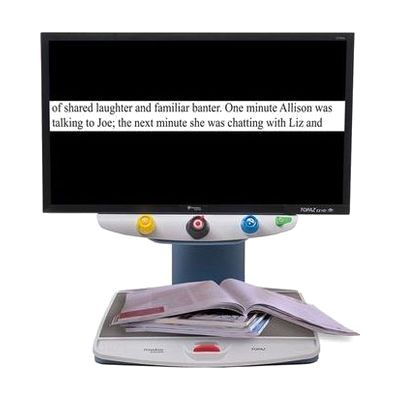
TOPAZ XL HD Desktop Video Magnifier
Price is what the vendor listed when last checked. Confirm it with the vendor before buying.
Last verified September 16, 2026 · classified July 7, 2026
What it is
Summary
AI-generated from vendor-published content · July 7, 2026
The TOPAZ XL HD is a desktop video magnifier (also called a CCTV) that uses a high-definition camera mounted over a sliding reading table to display enlarged text and images on a connected monitor. It's designed for people with low vision who need to read printed materials, handwriting, photos, or small objects at a desk — the HD camera delivers noticeably sharper contrast and detail compared to standard-definition video magnifiers, especially at lower magnification levels where you want more of a page visible at once. This is a component system: you'll need a compatible monitor (typically purchased separately), and the full setup benefits from help choosing the right monitor size and configuring display settings. The TOPAZ XL HD also supports PC compatibility, meaning the monitor can double as a computer display — useful for people who want to consolidate desk space, but that integration adds setup complexity.
Quick Facts Catalog facts · auto-generated
- AT Act lending
- Insurance
- Medicaid waiver
- Out of pocket
- Vocational rehab
What Setup Looks Like
- With a guide
- Connect the camera unit to a compatible HD monitor using the provided cables.
- Position the device on a stable desk surface with adequate clearance for the sliding reading table.
- Power on and use the control panel to adjust magnification, color contrast modes, and brightness to user preference.
- If using PC compatibility mode, configure video input switching on the monitor — allow 30–60 minutes for full setup. See manufacturer support resources for detailed instructions.
- With professional help
- An assistive technology professional (ATP) or low vision specialist can assess the appropriate magnification range, monitor size, and color contrast settings for the user's specific visual condition.
- An OT or ATP can also configure PC integration and train the user on all features — typically 1–2 sessions.
Getting it
Try Before You Buy
Devices like this are often available to borrow through your state's AT Act program — typically free or low-cost — so you can try it before buying or pursuing funding.
Where to Get It
This is the vendor WhatCanHelp tracks for this product — it may also be available from other retailers or a local supplier, and prices vary.
Some links may be affiliate links — WhatCanHelp may earn a small commission from purchases at no extra cost to you. More on affiliates →
As an Amazon Associate we earn from qualifying purchases.
How to Fund This
Equipment like this is often pursued through official state programs. These are common starting points — each program decides its own eligibility and what it covers, so the first step is always a phone call.
Compare & explore
Sources & fine print
Vendor facts (name, price, platforms, vendor link) sourced from Freedom Scientific — view on vendor site; last verified September 16, 2026.
Classification & description AI-generated from vendor-published content on July 7, 2026 · confidence: high. Vendor specs may lag; verify before relying on details in a clinical or funding artifact.