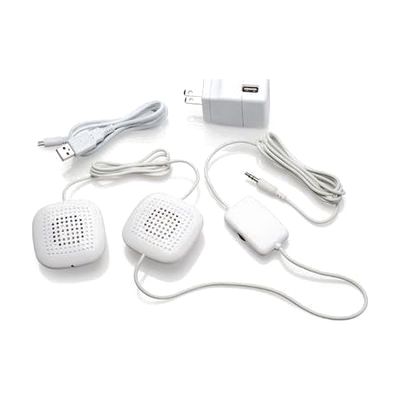
Sound Oasis PA-100 Amplified Stereo Pillow Speakers | Tinnitus Maskers
by Sound Oasis
Last verified July 4, 2026 · classified July 7, 2026
What it is
Summary
AI-generated from vendor-published content · July 7, 2026
These ultra-thin speakers slip under or inside a pillow so someone can listen to masking sounds or music at close range without disturbing a bed partner. They're primarily used by people managing tinnitus who need near-ear sound delivery at night — the proximity means effective masking at lower volume levels, which matters when you're trying to fall asleep. The kit connects via a standard 3.5mm jack to any sound therapy machine, phone, or MP3 player, and draws USB power for amplification when louder output is needed. The speakers themselves are the output device only — you'll still need a sound source (a Sound Oasis machine, a white noise app, whatever you use). The inline volume control is convenient, but the flat pillow form factor means audio quality is functional rather than audiophile.
Quick Facts Catalog facts · auto-generated
- Out of pocket
What Setup Looks Like
- Out of the box
- Plug the 3.5mm jack into your sound source (phone, sound therapy machine, MP3 player).
- Optionally connect the USB cable to a USB power source for amplified output.
- Place speakers flat under or inside a pillowcase and adjust volume with the inline control.
Getting it
Many states lend devices like this for free trial periods — find your state's AT lending program.
Where to Get It
Some links may be affiliate links — WhatCanHelp may earn a small commission from purchases at no extra cost to you. More on affiliates →
Wondering how equipment like this gets paid for? See the official funding programs in your state.
Compare & explore
Sources & fine print
Vendor facts (name, price, platforms, vendor link) sourced from Sound Oasis — view on vendor site; last verified July 4, 2026.
Classification & description AI-generated from vendor-published content on July 7, 2026 · confidence: high. Vendor specs may lag; verify before relying on details in a clinical or funding artifact.