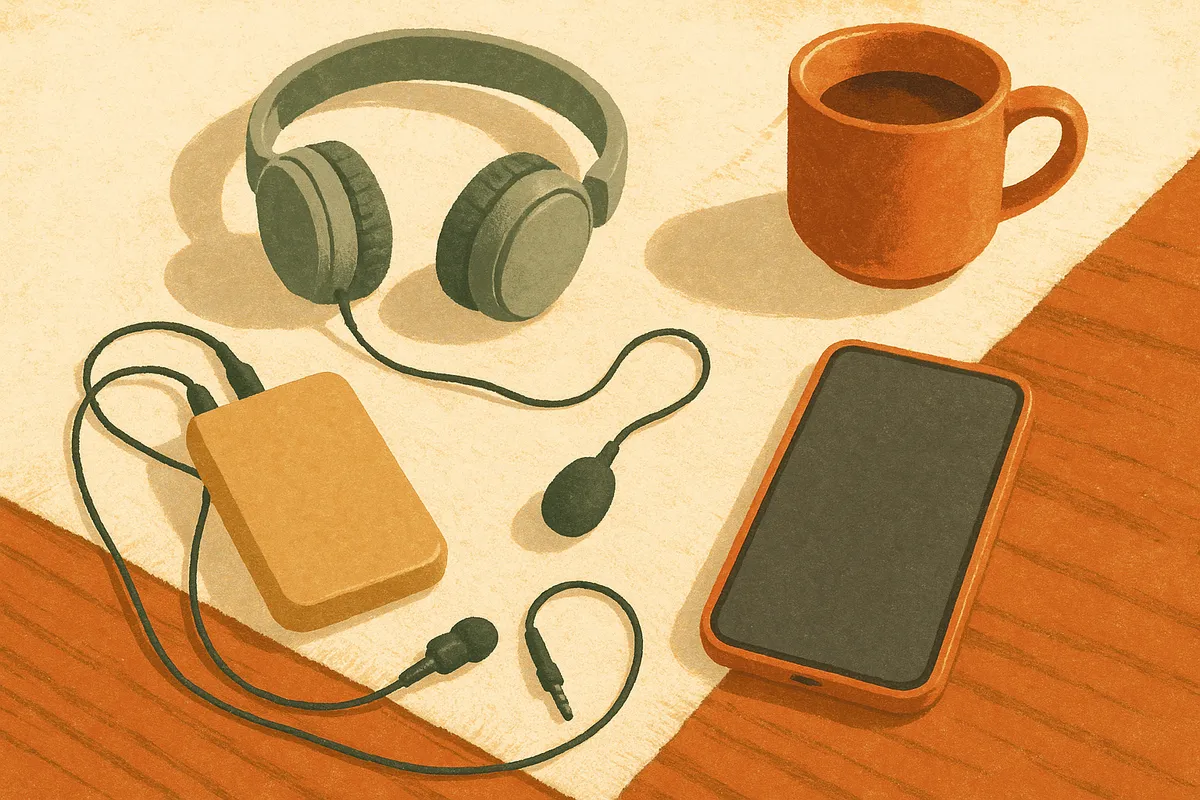
Hearing aids do a lot, but they amplify everything — the conversation you want and the espresso machine you don't. They're a starting point, not a finish line. The tools below pick up where hearing aids leave off: when the restaurant is too loud, the speaker is too far, the TV is fighting the household, or there's just no one to repeat the line you missed.
None of this replaces a hearing evaluation, and most of it works with hearing aids rather than against them. Here's what's worth knowing.
The Restaurant Problem: Personal Amplifiers
A personal amplifier (sometimes called a PSAP — personal sound amplification product) is a small box with a directional microphone and a headphone jack. You point the mic at the person you want to hear, you wear the headphones, and the noise of the room gets pushed into the background while the voice across the table gets a meaningful boost. They aren't hearing aids and shouldn't be used to skip an audiologist visit — but for the specific "I can't hear in this restaurant" problem, they're often the most cost-effective fix.
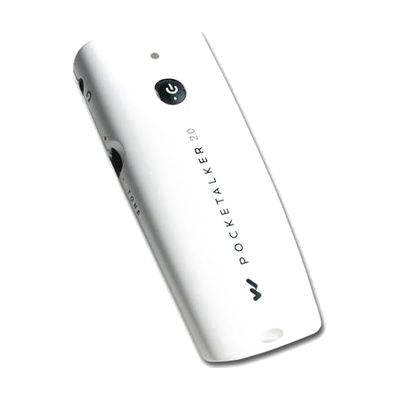 The Pocketalker 2.0 ($250) is the classic — Williams Sound has been building this category for decades. Microphone, earbuds, tone controls, runs on AA batteries, fits in a pocket. Self serve.
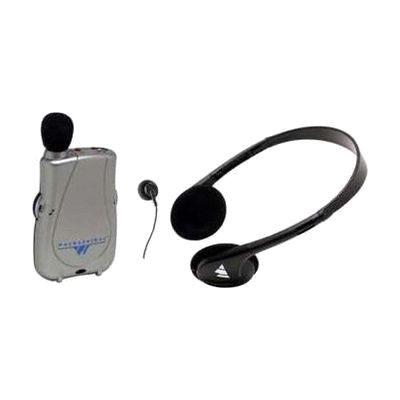 The Pocketalker Ultra with Headset and Earbud ($202) is the previous-generation model, still available, and a slightly cheaper way in. Same idea, similar performance, comes with both a headset and a single earbud so you can pick what's comfortable. Self serve.
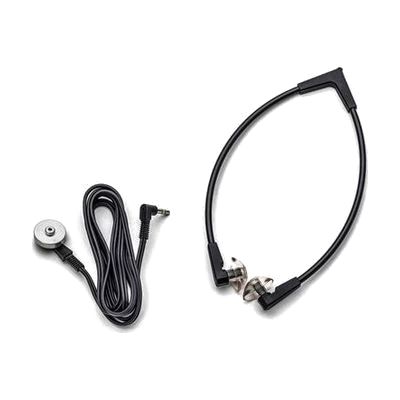 The Bellman Audio Stethoclips ($49.95) are stethoscope-style earphones that plug into a personal amplifier instead of standard headphones. For someone with significant hearing loss who wants the sound delivered cleanly to both ears without the bulk of a headset, this is a small accessory that meaningfully changes the experience. Self serve.
TV Without Fighting the Household
The two-people-one-TV problem is one of the most common hearing complaints and one of the easiest to solve. Wireless TV audio devices let one person turn the volume up to whatever they need while the room stays at a normal level — or stays silent, if it's late.
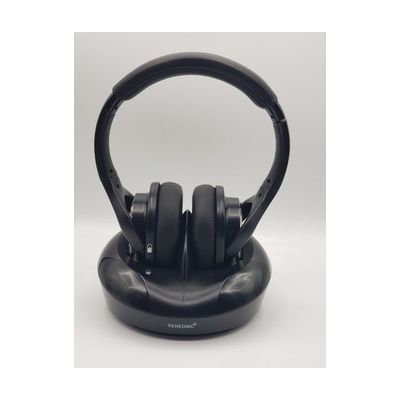 The Serene Wireless TV Headphones ($109.95) send TV audio straight to a pair of headphones at your preferred volume. The TV speaker keeps playing for everyone else — or you mute it entirely. Guided setup, since you'll need to connect it to your TV's audio output.
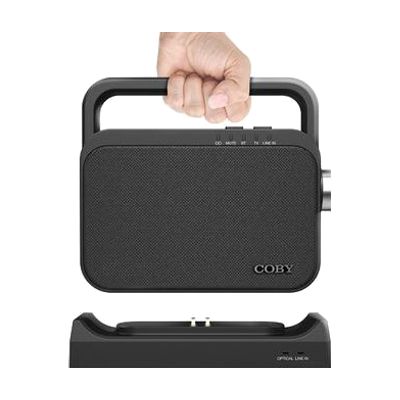 The LS&S Portable TV Speaker ($89.95) is the same idea but as a speaker you can carry around — up to 100 feet from the TV. Useful if you're cooking in the kitchen and don't want to miss the news, or if you'd rather have an external speaker close by than wear headphones. Guided setup.
Meetings, Lectures, and One-on-One Across a Desk
The same personal-amplifier approach scales up if you add the right accessory. A table mic captures voices around a conference table; a neckloop lets the amplifier feed audio directly into a hearing aid via its telecoil setting, with no headphones at all.
- The PT-Tools Conference Microphone ($89.95) plugs into a Pocketalker and sits on the table during a meeting. It picks up voices at head height rather than capturing the full acoustic mess of the room. Self serve.
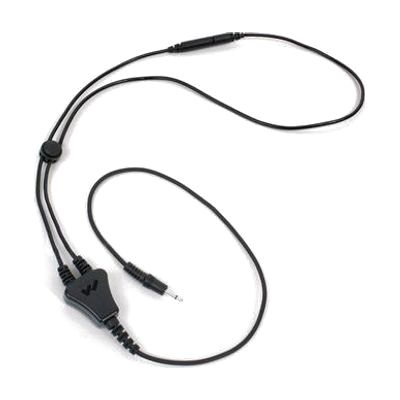 The Neckloop for Pocketalker Ultra ($78) is the bridge between a personal amplifier and hearing aids with a T-coil setting. Audio from the amplifier transmits wirelessly to the hearing aid through a magnetic field — no headphones needed, hearing aids stay in. Guided setup; check that your hearing aids have a T-coil and that your audiologist has enabled it.
Phone Calls That Still Need to Happen
Phone audio is a narrower frequency band than in-person speech, which is why a call can be hard to follow even when face-to-face conversation feels fine. Two different approaches, depending on whether you want to read the call or hear it.
- The CapTel 2400i Captioned Telephone ($75) shows real-time word-for-word captions of what the other person is saying on a large touchscreen — like reading subtitles while you talk. It's a regulated FCC service, free to use for anyone with certified hearing loss, with only the hardware cost up front. Guided setup — needs an internet connection and the captioning service registered.
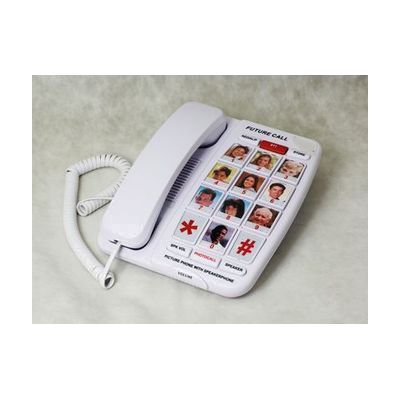 The Amplified Corded Telephone by Future Call ($59.95) is a no-frills landline phone with 40 dB of incoming amplification — well above the typical 18–26 dB amplified phone. Good for someone who doesn't want to learn a new device, just a louder version of the one they already know. Self serve.
What Your Phone Already Does, For Free
Two pieces of software worth knowing about before spending money. Both run on the phone you already own.
 Google Live Transcribe (free, Android) shows real-time captions of spoken audio on your screen — conversations, podcasts, phone calls, the TV in the background. Works offline for English. The companion feature, Live Caption, captions any audio playing on the device itself. Self serve.
 Apple Hearing Accessibility (free, iOS / iPadOS / macOS / watchOS) bundles Live Captions, Conversation Boost (which uses AirPods Pro to focus on the person in front of you), Sound Recognition (notifies you of doorbells, alarms, baby cries), and Made-for-iPhone hearing aid pairing. Guided setup — most of it is one or two settings deep, but the features are scattered across Accessibility menus.
When You're the One Being Heard
Most of this post is about hearing better. But for the other half of the conversation — someone with a quiet voice, vocal fatigue, or a condition like Parkinson's that softens speech — the right tool is a voice amplifier worn by the speaker, not the listener.
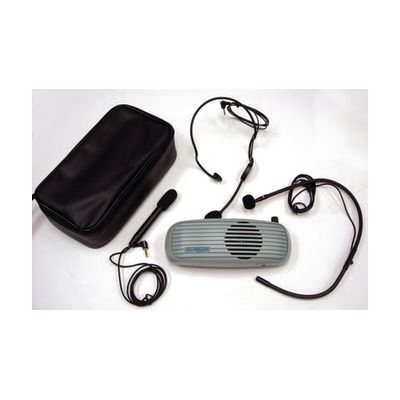 The ChatterVox Voice Amplifier ($254.95) is a belt-worn unit with a headset mic that boosts the wearer's voice by roughly 14 decibels through a small speaker. Originally designed for teachers and tour guides, it's just as useful for someone whose voice can't carry across a dinner table anymore. Guided setup, and worth pairing with a speech-language pathologist's input if vocal fatigue is the underlying issue.
One Small Thing for Hearing Aid Wearers
Hearing aids spend their days in the warm, humid environment of a human ear. Moisture is one of the most common reasons they stop working, and it builds up so gradually that people don't notice the sound degrading until it's already gone.
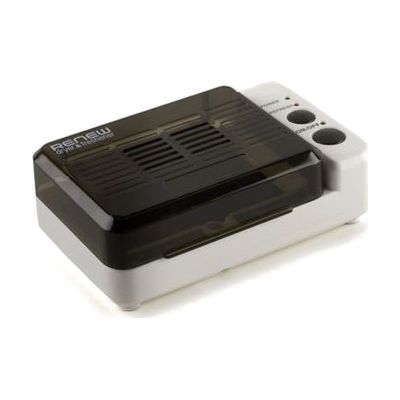 The Serene Renew Hearing Aid Dryer ($59.95) uses gentle heat and UV light overnight to dry out moisture and reduce bacteria that cause ear irritation. Drop hearing aids in before bed, take them out in the morning. One of those small accessories that quietly extends the life of a much more expensive device. Self serve.
A Few Things This Post Doesn't Cover
Hearing aids themselves are out of scope — they need a clinical fitting, not a discovery tool, and the right place to start is an audiologist. Same for cochlear implants. We've also left out the equally important world of alerting systems — doorbells you can feel, vibrating alarm clocks, smoke alarms with strobe lights — which deserve their own post. And tinnitus, which is its own thing entirely.
If you're not sure where to start, the guided intake walks through a few questions and surfaces options that fit. To browse directly, all hearing products are filterable by price, complexity, and platform.