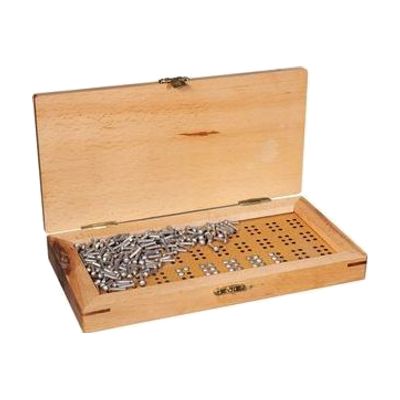
Braille Board
by MaxiAids
Last verified June 17, 2026 · classified April 26, 2026
What it is
Summary
AI-generated from vendor-published content · April 26, 2026
The Braille Board is a hands-on practice board with a grid of cells and small metal pegs that you insert to form the raised dot patterns used in braille. It's designed for people who are actively learning to read or write braille — whether a student who is blind or has low vision, a sighted teacher or parent learning to support them, or a rehabilitation client building tactile literacy skills. You get the board and pegs as a complete standalone kit, with enough cells and pegs to practice individual letters, short words, and simple phrases. One thing to keep in mind: this is a practice and learning tool, not a writing device — it doesn't produce portable braille documents the way a slate and stylus or braillewriter would.
Quick Facts Catalog facts · auto-generated
- AT Act lending
- Out of pocket
- School district
What Setup Looks Like
- Out of the box
- Place the board on a flat surface and use the included metal pegs to form braille dot patterns in the grid cells.
- Practice individual braille characters or words by inserting pegs in the correct positions for each letter.
Getting it
Try Before You Buy
Devices like this are often available to borrow through your state's AT Act program — typically free or low-cost — so you can try it before buying or pursuing funding.
Where to Get It
Some links may be affiliate links — WhatCanHelp may earn a small commission from purchases at no extra cost to you. More on affiliates →
As an Amazon Associate we earn from qualifying purchases.
Wondering how equipment like this gets paid for? See the official funding programs in your state.
Compare & explore
Sources & fine print
Vendor facts (name, price, platforms, vendor link) sourced from MaxiAids — view on vendor site; last verified June 17, 2026.
Classification & description AI-generated from vendor-published content on April 26, 2026 · confidence: high. Vendor specs may lag; verify before relying on details in a clinical or funding artifact.