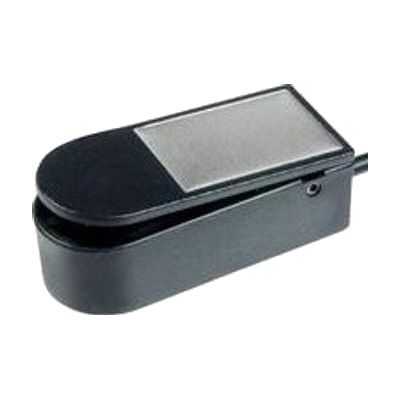
Micro Light Switch
by AbleNet
Price is what the vendor listed when last checked. Confirm it with the vendor before buying.
Last verified September 17, 2026 · classified April 26, 2026
What it is
Summary
AI-generated from vendor-published content · April 26, 2026
The Micro Light Switch is a tiny, ultra-sensitive switch that sends an activation signal to switch-adapted devices with just 10 grams of force — about the weight of a paperclip. It's designed for someone who has very limited movement or strength, such as a person with ALS, cerebral palsy, or spinal cord injury, who cannot reliably press a standard switch. This is a component, not a complete solution — you'll need a switch-adapted device (AAC device, computer, toy, or environmental control unit) with a 3.5mm switch jack to plug it into, plus a mounting arm or system to position it correctly near the user's active movement site. The activation surface is quite small at about half an inch wide, so precise positioning is critical — getting that right typically takes a few sessions with an OT or ATP.
Quick Facts Catalog facts · auto-generated
- AT Act lending
- Medicaid waiver
- Out of pocket
- School district
- Vocational rehab
What Setup Looks Like
- Out of the box
Plug the 3.5mm cable into a compatible switch-adapted device to confirm basic connectivity. - With a guide
- Identify the user's most reliable and consistent movement site (e.g., finger, thumb, cheek, eyebrow).
- Mount the switch using a 4-40 screw-compatible mounting arm positioned at that site.
- Test activation force and placement — allow 15-30 minutes for initial positioning trials. See manufacturer support resources for detailed instructions.
- With professional help
- An occupational therapist (OT) or assistive technology professional (ATP) should conduct a motor access assessment to determine the optimal activation site and switch selection.
- Expect 1-3 sessions over 1-2 weeks to trial placement, confirm reliable access, and integrate with the target device.
Getting it
Try Before You Buy
Devices like this are often available to borrow through your state's AT Act program — typically free or low-cost — so you can try it before buying or pursuing funding.
Where to Get It
These are the vendors WhatCanHelp tracks for this product — it may also be available from other retailers or a local supplier, and prices vary.
Some links may be affiliate links — WhatCanHelp may earn a small commission from purchases at no extra cost to you. More on affiliates →
As an Amazon Associate we earn from qualifying purchases.
How to Fund This
Equipment like this is often pursued through official state programs. These are common starting points — each program decides its own eligibility and what it covers, so the first step is always a phone call.
Compare & explore
Sources & fine print
Vendor facts (name, price, platforms, vendor link) sourced from AbleNet — view on vendor site; last verified September 17, 2026.
Classification & description AI-generated from vendor-published content on April 26, 2026 · confidence: high. Vendor specs may lag; verify before relying on details in a clinical or funding artifact.