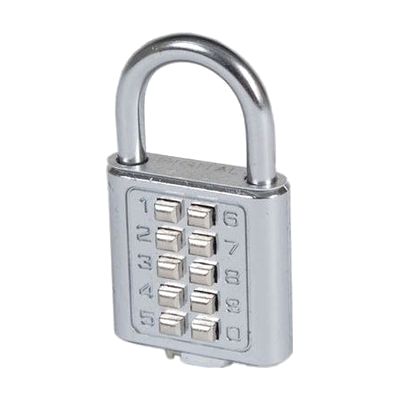
Push Button Padlock
by American Printing House for the Blind
Price is what the vendor listed when last checked. Confirm it with the vendor before buying.
Last verified September 20, 2026 · classified April 26, 2026
What it is
Summary
AI-generated from vendor-published content · April 26, 2026
This is a padlock that opens by pressing numbered buttons in sequence rather than spinning a dial, making it usable without being able to see or precisely align a traditional combination dial. It's designed for blind or low-vision students who need to secure a school locker independently — spinning dial locks require visual alignment that's difficult or impossible without sight. The lock comes pre-set with a fixed 5-digit combination and has tactilely distinct raised buttons arranged in two columns, so users navigate by touch alone. One significant limitation: the combination is factory-set and cannot be changed, so if the combination is lost or shared, you'll need to replace the lock entirely.
Quick Facts Catalog facts · auto-generated
- AT Act lending
- Out of pocket
- School district
What Setup Looks Like
- Out of the box
- Record the factory-set 5-digit combination in a safe place before first use.
- Practice pressing the button sequence in order — the lock opens immediately after the correct combination is entered.
Getting it
Try Before You Buy
Devices like this are often available to borrow through your state's AT Act program — typically free or low-cost — so you can try it before buying or pursuing funding.
Where to Get It
These are the vendors WhatCanHelp tracks for this product — it may also be available from other retailers or a local supplier, and prices vary.
Some links may be affiliate links — WhatCanHelp may earn a small commission from purchases at no extra cost to you. More on affiliates →
As an Amazon Associate we earn from qualifying purchases.
Wondering how equipment like this gets paid for? See the official funding programs in your state.
Compare & explore
Sources & fine print
Vendor facts (name, price, platforms, vendor link) sourced from American Printing House for the Blind — view on vendor site; last verified September 20, 2026.
Classification & description AI-generated from vendor-published content on April 26, 2026 · confidence: high. Vendor specs may lag; verify before relying on details in a clinical or funding artifact.