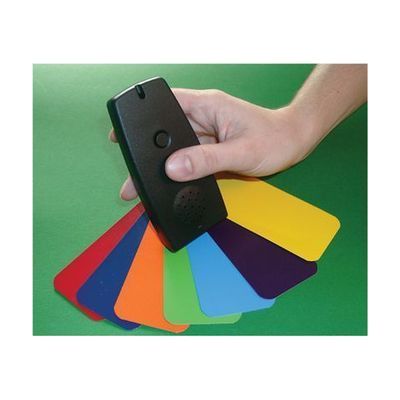
Colorino Talking Color Identifier, Spanish
Last verified June 19, 2026 · classified April 26, 2026
What it is
Summary
AI-generated from vendor-published content · April 26, 2026
The Colorino Talking Color Identifier announces the color of any surface or object when you point it at something and press a button, speaking the result aloud in Spanish. It's designed for people who are blind or have low vision and need to independently identify clothing colors, match outfits, sort laundry, or distinguish items by color in daily life. This is a self-contained, handheld device — no smartphone app or computer needed — and it comes with a protective pouch. Batteries aren't included, and the lanyard cord is sold separately, which is a common way to keep it handy around the neck.
Quick Facts Catalog facts · auto-generated
- AT Act lending
- Out of pocket
- Vocational rehab
What Setup Looks Like
- Out of the box
- Insert 2 AAA batteries (not included).
- Point the sensor at any surface and press the button to hear the color spoken in Spanish.
- Adjust volume using the two-button combination if needed.
Getting it
Try Before You Buy
Devices like this are often available to borrow through your state's AT Act program — typically free or low-cost — so you can try it before buying or pursuing funding.
Where to Get It
Some links may be affiliate links — WhatCanHelp may earn a small commission from purchases at no extra cost to you. More on affiliates →
As an Amazon Associate we earn from qualifying purchases.
How to Fund This
Equipment like this is often pursued through official state programs. These are common starting points — each program decides its own eligibility and what it covers, so the first step is always a phone call.
Compare & explore
Sources & fine print
Vendor facts (name, price, platforms, vendor link) sourced from Independent Living Aids — view on vendor site; last verified June 19, 2026.
Classification & description AI-generated from vendor-published content on April 26, 2026 · confidence: high. Vendor specs may lag; verify before relying on details in a clinical or funding artifact.