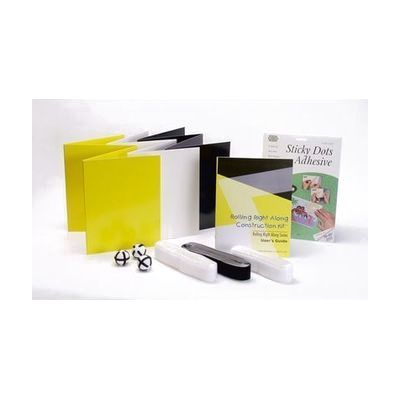
Rolling Right Along Construction Kit
by American Printing House for the Blind
Last verified June 15, 2026 · classified May 23, 2026
What it is
Summary
AI-generated from vendor-published content · May 23, 2026
This kit gives teachers and parents the materials to build their own tactile-interactive storybooks modeled after APH's Rolling Into Place series — books designed for students with visual impairments who learn through touch and hands-on exploration. Each book made with this kit incorporates tactile elements that make narrative and concept-building accessible without relying on print or visual images. You're buying a construction kit, not a finished book — the adult builds the book, then uses it as an instructional tool with a child. It works best when the educator or parent already has some familiarity with tactile learning materials or APH's approach; without that context, knowing how to sequence and present the resulting book effectively may take some guidance.
Quick Facts Catalog facts · auto-generated
- AT Act lending
- Out of pocket
- School district
What Setup Looks Like
- Out of the box
Unpack the kit and review included components to understand what materials are available for book construction. - With a guide
- Review APH's Rolling Into Place storybook for reference on how tactile elements are organized and used.
- Assemble the book using the kit components, incorporating tactile features aligned with the story or concept you want to teach.
- Plan how you'll introduce the finished book to the student — consider pacing, vocabulary, and tactile exploration sequence. Allow 30–60 minutes for initial construction. See manufacturer support resources for detailed instructions.
- With professional help
- A Teacher of the Visual Impaired (TVI) can advise on which tactile elements are most appropriate for a specific student's tactile literacy level.
- Consultation with a TVI typically takes one session and can significantly improve how the book is constructed and used instructionally.
Getting it
Try Before You Buy
Devices like this are often available to borrow through your state's AT Act program — typically free or low-cost — so you can try it before buying or pursuing funding.
Where to Get It
Some links may be affiliate links — WhatCanHelp may earn a small commission from purchases at no extra cost to you. More on affiliates →
Wondering how equipment like this gets paid for? See the official funding programs in your state.
Compare & explore
Sources & fine print
Vendor facts (name, price, platforms, vendor link) sourced from American Printing House for the Blind — view on vendor site; last verified June 15, 2026.
Classification & description AI-generated from vendor-published content on May 23, 2026 · confidence: high. Vendor specs may lag; verify before relying on details in a clinical or funding artifact.