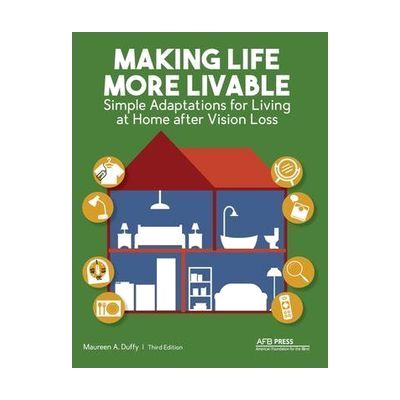
Making Life More Livable: Simple Adaptations for Living at Home after Vision Loss
by American Printing House for the Blind
Last verified June 15, 2026 · classified May 23, 2026
What it is
Summary
AI-generated from vendor-published content · May 23, 2026
This is a practical guide focused on low-tech adaptations that help people continue living independently at home after vision loss — things like labeling strategies, lighting adjustments, contrast techniques, and reorganizing the home environment. It's aimed at older adults experiencing age-related vision decline and the family members or caregivers helping them navigate daily life. The book is available in multiple formats from APH, including EPUB for use with screen readers or e-reading apps. As a reference resource rather than a device, it won't replace an orientation and mobility specialist or low vision therapist — but it's a solid, affordable starting point before or between professional appointments.
Quick Facts Catalog facts · auto-generated
- AT Act lending
- Out of pocket
What Setup Looks Like
- Out of the box
Read the print or EPUB version directly — no setup required for print edition. - With a guide
- Download an EPUB reader app (APH provides free recommendations) if using the digital version.
- Open the EPUB file in your reader and use built-in accessibility features like text-to-speech or font enlargement as needed — allow 10–15 minutes to get oriented.
Getting it
Try Before You Buy
Devices like this are often available to borrow through your state's AT Act program — typically free or low-cost — so you can try it before buying or pursuing funding.
Where to Get It
Some links may be affiliate links — WhatCanHelp may earn a small commission from purchases at no extra cost to you. More on affiliates →
Wondering how equipment like this gets paid for? See the official funding programs in your state.
Compare & explore
Sources & fine print
Vendor facts (name, price, platforms, vendor link) sourced from American Printing House for the Blind — view on vendor site; last verified June 15, 2026.
Classification & description AI-generated from vendor-published content on May 23, 2026 · confidence: high. Vendor specs may lag; verify before relying on details in a clinical or funding artifact.