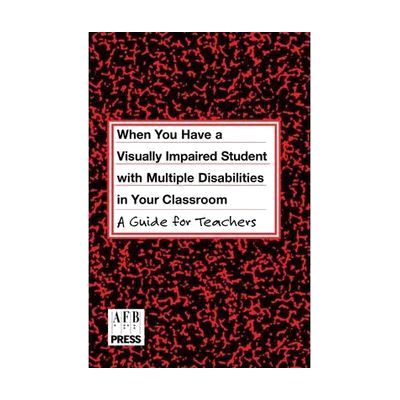
When You Have a Visually Impaired Student with Multiple Disabilities in Your Classroom: A Guide for Teachers
by American Printing House for the Blind
Last price listed before it was discontinued.
What it is
Summary
AI-generated from vendor-published content · October 17, 2026
This guide is written for teachers and for paraeducators, who are also called classroom aides, teaching assistants, or paraprofessionals. It explains what a paraeducator's role looks like when working with a student who is visually impaired and has other disabilities, and how that role fits with the rest of the educational team. It is a reading resource, not a device or a lesson kit. It is sold as a made-to-order or digital title, and the digital version needs an EPUB reader app to open.
Getting it
Where it was sold
This is the vendor WhatCanHelp tracks for this product — it may also be available from other retailers or a local supplier, and prices vary.
Details
Quick Facts Catalog facts · auto-generated
- Addresses
- Platform
- Age range
- Complexity
- Professional guidance helps
- Price
- $15.95
- Funding
- Out of pocket
- School district
What setup looks like
- Out of the box
- If you order the digital version, open the EPUB file in a free EPUB reader app.
- Read it alongside the student's educational team so everyone shares the same picture of the aide's role.
- If you order a printed copy, it is made to order, so plan on about 10-14 business days before it ships.
- With a guide
- Go over the guide with a teacher of students with visual impairments (TVI) or another team member.
- Use that talk to decide how its ideas apply to this student's own goals and daily routines.
Compare & explore
More professional resources


Sources & fine print
Vendor facts (name, price, platforms, vendor link) sourced from American Printing House for the Blind — view on vendor site (opens in a new tab); last checked November 14, 2026.
Classification & description AI-generated from vendor-published content on October 17, 2026 · confidence: high. Vendor specs may lag; verify before relying on details in a clinical or funding artifact.