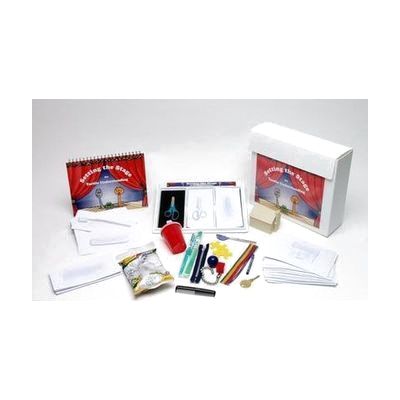
Setting the Stage for Tactile Understanding Kit
by American Printing House for the Blind
Last verified June 15, 2026 · classified May 23, 2026
What it is
Summary
AI-generated from vendor-published content · May 23, 2026
This kit from APH supports the development of tactile literacy in young children who are blind or have low vision — specifically the foundational skills that come before reading braille, like discriminating between textures, understanding raised-line symbols, and exploring objects through touch. It includes hands-on materials for both teaching and informal assessment, so educators and specialists can gauge where a child is developmentally and guide next steps. This is a piece of a broader early intervention or vision program, not a standalone curriculum — it works best alongside an orientation and mobility specialist, teacher of students with visual impairments (TVI), or early childhood professional. The informal assessment component is a useful feature, but the kit doesn't come with standardized scoring or normative data, so interpretation depends on the practitioner's clinical judgment.
Quick Facts Catalog facts · auto-generated
- AT Act lending
- Out of pocket
- School district
What Setup Looks Like
- Out of the box
Unbox and review included materials to understand the tactile exploration activities and activity sequence. - With a guide
- Review APH documentation to understand the informal assessment framework and how to interpret observations.
- Plan a session sequence aligned to the child's current tactile awareness level — expect 30–60 minutes of prep for first use.
- With professional help
- A teacher of students with visual impairments (TVI) or early intervention specialist should administer the kit within an individualized program.
- Integrate findings into the child's IEP or IFSP with the educational team — typically done across multiple sessions over several weeks.
- See manufacturer support resources for detailed instructions.
Getting it
Try Before You Buy
Devices like this are often available to borrow through your state's AT Act program — typically free or low-cost — so you can try it before buying or pursuing funding.
Where to Get It
Some links may be affiliate links — WhatCanHelp may earn a small commission from purchases at no extra cost to you. More on affiliates →
Wondering how equipment like this gets paid for? See the official funding programs in your state.
Compare & explore
Sources & fine print
Vendor facts (name, price, platforms, vendor link) sourced from American Printing House for the Blind — view on vendor site; last verified June 15, 2026.
Classification & description AI-generated from vendor-published content on May 23, 2026 · confidence: high. Vendor specs may lag; verify before relying on details in a clinical or funding artifact.