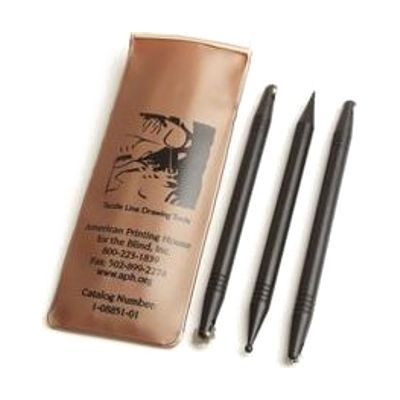
Tactile Graphics Kit: Line-Drawing Tool Kit
by American Printing House for the Blind
Price is what the vendor listed when last checked. Confirm it with the vendor before buying.
Accessory or replacement part Made to go with another product — check it fits what you have.
Last verified September 17, 2026 · classified May 23, 2026
What it is
Summary
AI-generated from vendor-published content · May 23, 2026
This kit provides the hand tools needed to draw raised-line tactile graphics by hand — things like embossing styluses, tracing wheels, and drawing boards used to create tactile images that a person who is blind or has low vision can read through touch. It's designed for teachers, TVIs (teachers of visually impaired students), and braille literacy specialists who need to produce custom tactile diagrams, maps, or illustrations for a student. This is a replacement item for the full Tactile Graphics Kit (APH catalog 1-08851-00), so if you're buying this standalone, you'll want to confirm it complements tools you already have. The kit supports hands-on tactile literacy instruction but requires the user to know how to produce tactile graphics effectively — there's a learning curve to getting clean, readable raised lines.
Quick Facts Catalog facts · auto-generated
- Out of pocket
- School district
What Setup Looks Like
- Out of the box
Unpack tools and use with a tactile drawing surface (e.g., rubber mat or screen board) to begin creating raised-line graphics by hand. - With professional help
- A Teacher of the Visually Impaired (TVI) or AT specialist should guide effective use of tactile graphic production techniques to ensure resulting graphics are readable by touch.
- Expect initial training or self-study before producing quality tactile graphics for student use.
Getting it
Many states lend devices like this for free trial periods — find your state's AT lending program.
Where to Get It
This is the vendor WhatCanHelp tracks for this product — it may also be available from other retailers or a local supplier, and prices vary.
Some links may be affiliate links — WhatCanHelp may earn a small commission from purchases at no extra cost to you. More on affiliates →
As an Amazon Associate we earn from qualifying purchases.
Wondering how equipment like this gets paid for? See the official funding programs in your state.
Compare & explore
Sources & fine print
Vendor facts (name, price, platforms, vendor link) sourced from American Printing House for the Blind — view on vendor site; last verified September 17, 2026.
Classification & description AI-generated from vendor-published content on May 23, 2026 · confidence: high. Vendor specs may lag; verify before relying on details in a clinical or funding artifact.