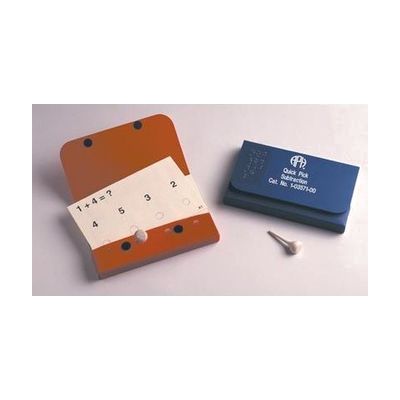
Quick Pick Math: Multiplication
by American Printing House for the Blind
Last verified June 15, 2026 · classified May 23, 2026
What it is
Summary
AI-generated from vendor-published content · May 23, 2026
A card-based multiplication practice game with each question printed in both large print and Nemeth Braille, so students with visual impairments can work on math facts alongside sighted peers. The fifty cards cover multiplication problems and are designed for repeated practice in a game format — a good fit for elementary-age students learning their times tables who are blind or have low vision. This is a complete, standalone kit: open the packet and start playing, no additional materials or devices needed. The card set covers multiplication only, so you'll need separate APH titles if you want addition, subtraction, or division in the same accessible format.
Quick Facts Catalog facts · auto-generated
- AT Act lending
- Out of pocket
- School district
What Setup Looks Like
- Out of the box
Remove cards from the plastic packet and begin using — no setup required. - With a guide
- Review the included instructions to understand any game rules or card-sorting formats.
- Integrate into a lesson plan or tutoring session as needed — takes about 5 minutes to orient to the format.
Getting it
Try Before You Buy
Devices like this are often available to borrow through your state's AT Act program — typically free or low-cost — so you can try it before buying or pursuing funding.
Where to Get It
Some links may be affiliate links — WhatCanHelp may earn a small commission from purchases at no extra cost to you. More on affiliates →
Wondering how equipment like this gets paid for? See the official funding programs in your state.
Compare & explore
Sources & fine print
Vendor facts (name, price, platforms, vendor link) sourced from American Printing House for the Blind — view on vendor site; last verified June 15, 2026.
Classification & description AI-generated from vendor-published content on May 23, 2026 · confidence: high. Vendor specs may lag; verify before relying on details in a clinical or funding artifact.