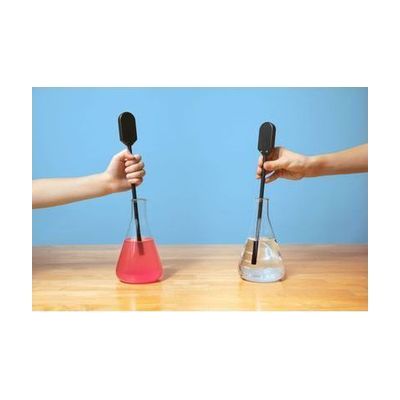
Submersible Audio Light Sensor (SALS)
by American Printing House for the Blind
Last verified June 15, 2026 · classified May 23, 2026
What it is
Summary
AI-generated from vendor-published content · May 23, 2026
SALS converts detected light levels into audible tones, letting students who are blind or have low vision participate in science experiments that rely on measuring or tracking light — things like observing photosynthesis, testing transparency, or comparing brightness. The glass probe detects light at its tip, and a connected app (iOS, Android, or MATT Connect) translates the signal into a tone that rises or falls with light intensity. This is a piece of a larger setup: you'll need a compatible smartphone, tablet, or MATT Connect device, plus the free app, to use it. The probe is submersible, which opens up wet lab experiments that would otherwise exclude students using touch-based methods.
Quick Facts Catalog facts · auto-generated
- AT Act lending
- Out of pocket
- School district
What Setup Looks Like
- Out of the box
Insert the SALS probe — the device detects light at the glass tip immediately when powered. - With a guide
- Download the SALS companion app on a compatible iOS or Android device, or connect via MATT Connect.
- Pair or plug in the SALS sensor and confirm tone output responds to light changes before the lab activity.
- Allow 15–30 minutes for setup and familiarization. See manufacturer support resources for detailed instructions.
- With professional help
- A Teacher of the Visually Impaired (TVI) or science teacher familiar with accessible science tools should integrate SALS into specific lab curricula and ensure the student understands tone-to-light correspondence.
- Expect one or two short orientation sessions before independent use in science activities.
Getting it
Try Before You Buy
Devices like this are often available to borrow through your state's AT Act program — typically free or low-cost — so you can try it before buying or pursuing funding.
Where to Get It
Some links may be affiliate links — WhatCanHelp may earn a small commission from purchases at no extra cost to you. More on affiliates →
Wondering how equipment like this gets paid for? See the official funding programs in your state.
Compare & explore
Sources & fine print
Vendor facts (name, price, platforms, vendor link) sourced from American Printing House for the Blind — view on vendor site; last verified June 15, 2026.
Classification & description AI-generated from vendor-published content on May 23, 2026 · confidence: high. Vendor specs may lag; verify before relying on details in a clinical or funding artifact.