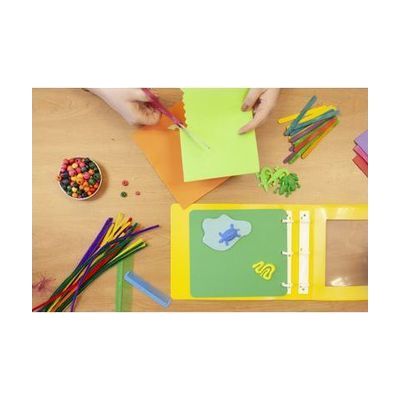
Tactile Book Builder Kit
by American Printing House for the Blind
Last verified July 30, 2026 · classified May 23, 2026
What it is
Summary
AI-generated from vendor-published content · May 23, 2026
A comprehensive kit of tactile materials — textured papers, foam sheets, fabric swatches, braille labels, binding components, and similar supplies — that teachers, parents, or vision specialists use to hand-make custom tactile books for young children who are blind or have low vision. Tactile books replace the visual illustrations in picture books with raised surfaces a child can explore by touch, building literacy foundations and a connection to book-sharing routines before braille reading begins. This is a materials kit, not a finished product — someone still has to design and construct each book, which takes time and skill; a trained teacher of the visually impaired (TVI) or early childhood specialist will get far more out of it than a family working without support. The kit is Federal Quota eligible, meaning students served by APH through the American Printing House quota system may receive it through their state residential or public school program at no direct cost.
Quick Facts Catalog facts · auto-generated
- AT Act lending
- Medicaid waiver
- Out of pocket
- School district
What Setup Looks Like
- Out of the box
Open the kit and inventory the included materials — tactile sheets, textures, binding hardware, and labeling supplies are all contained in the kit. - With a guide
- Review APH's tactile book design guidelines and tutorials to understand principles of effective tactile illustration.
- Plan a simple first book around a child's real experience or a familiar story, selecting appropriate textures for each page.
- Assemble and bind the book, then introduce it to the child with supported hand-over-hand exploration — allow 1-3 hours per book depending on complexity.
- See manufacturer support resources for detailed instructions.
- With professional help
- A Teacher of the Visually Impaired (TVI) or early childhood vision specialist should guide book design to ensure tactile images are meaningful and age-appropriate.
- Collaboration with the child's educational team (OT, SLP) can improve how books support literacy and communication goals.
- Initial training or consultation typically takes 1-2 sessions; ongoing book creation is ongoing throughout the school year.
Getting it
Try Before You Buy
Devices like this are often available to borrow through your state's AT Act program — typically free or low-cost — so you can try it before buying or pursuing funding.
Where to Get It
This is the vendor WhatCanHelp tracks for this product — it may also be available from other retailers or a local supplier, and prices vary.
Some links may be affiliate links — WhatCanHelp may earn a small commission from purchases at no extra cost to you. More on affiliates →
As an Amazon Associate we earn from qualifying purchases.
How to Fund This
Equipment like this is often pursued through official state programs. These are common starting points — each program decides its own eligibility and what it covers, so the first step is always a phone call.
Compare & explore
Sources & fine print
Vendor facts (name, price, platforms, vendor link) sourced from American Printing House for the Blind — view on vendor site; last verified July 30, 2026.
Classification & description AI-generated from vendor-published content on May 23, 2026 · confidence: high. Vendor specs may lag; verify before relying on details in a clinical or funding artifact.