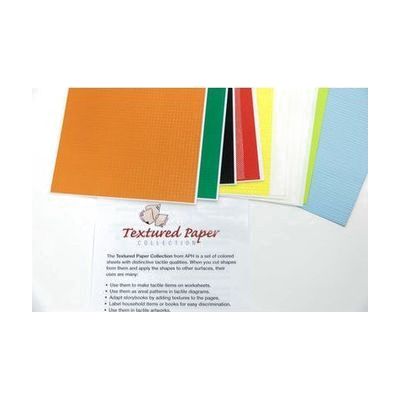
Textured Paper Collection
by American Printing House for the Blind
Price is what the vendor listed when last checked. Confirm it with the vendor before buying.
Last verified September 17, 2026 · classified May 23, 2026
What it is
Summary
AI-generated from vendor-published content · May 23, 2026
This is a set of paper sheets with distinct tactile textures, intended to be cut and attached to objects, communication boards, calendars, or learning materials to create tactile distinctions that a person with visual impairment can feel rather than see. It's most useful for students or adults who are blind or have low vision and need to differentiate objects, locations, or symbols through touch — a calendar with different textures for different activity types, for example, or a communication board where each symbol has a unique feel. This is raw material, not a finished product; you'll be cutting, arranging, and applying these sheets yourself, usually with guidance from a teacher of the visually impaired (TVI) or orientation and mobility specialist. The collection's usefulness depends entirely on how creatively and consistently it gets incorporated into a student's daily routines and materials.
Quick Facts Catalog facts · auto-generated
- AT Act lending
- Out of pocket
- School district
What Setup Looks Like
- Out of the box
Open the collection and feel each textured sheet to understand the tactile range available. - With a guide
- Identify the activity or object where tactile differentiation is needed (e.g., schedule board, communication symbols, labeled containers).
- Cut and attach appropriate textures using adhesive — typically a 30-60 minute project per application. See manufacturer support resources for detailed instructions.
- With professional help
- A teacher of the visually impaired (TVI) or orientation and mobility specialist can design a tactile labeling system using these materials that is consistent across the student's environment.
- Expect integration over multiple sessions as new applications are identified — typically ongoing throughout the school year.
Getting it
Try Before You Buy
Devices like this are often available to borrow through your state's AT Act program — typically free or low-cost — so you can try it before buying or pursuing funding.
Where to Get It
This is the vendor WhatCanHelp tracks for this product — it may also be available from other retailers or a local supplier, and prices vary.
Some links may be affiliate links — WhatCanHelp may earn a small commission from purchases at no extra cost to you. More on affiliates →
As an Amazon Associate we earn from qualifying purchases.
Wondering how equipment like this gets paid for? See the official funding programs in your state.
Compare & explore
Sources & fine print
Vendor facts (name, price, platforms, vendor link) sourced from American Printing House for the Blind — view on vendor site; last verified September 17, 2026.
Classification & description AI-generated from vendor-published content on May 23, 2026 · confidence: high. Vendor specs may lag; verify before relying on details in a clinical or funding artifact.