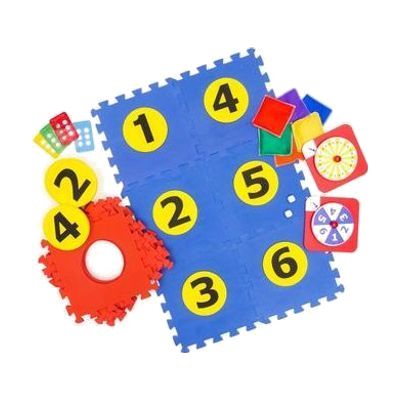
HOP-A-DOT MAT
by American Printing House for the Blind
Last verified June 15, 2026 · classified May 23, 2026
What it is
Summary
AI-generated from vendor-published content · May 23, 2026
A large floor mat printed with raised-dot braille cell patterns that students physically hop, step, or move across to learn braille through whole-body movement. It's designed for blind and low vision students who are just beginning to learn the braille code, turning what is normally a tabletop activity into something kinesthetic. The mat is a standalone, ready-to-use instructional tool — no setup beyond unrolling it — though it works best as part of a structured braille literacy program guided by a teacher of the visually impaired (TVI). The mat format makes braille engaging for young learners, but it doesn't replace hands-on reading practice with actual braille text.
Quick Facts Catalog facts · auto-generated
- AT Act lending
- Out of pocket
- School district
What Setup Looks Like
- Out of the box
Unroll or lay flat on the floor — students can begin using it immediately. - With professional help
- A teacher of the visually impaired (TVI) integrates the mat into a sequential braille literacy curriculum.
- Expect ongoing use across multiple lessons as part of a formal braille instruction program.
Getting it
Try Before You Buy
Devices like this are often available to borrow through your state's AT Act program — typically free or low-cost — so you can try it before buying or pursuing funding.
Where to Get It
Some links may be affiliate links — WhatCanHelp may earn a small commission from purchases at no extra cost to you. More on affiliates →
Wondering how equipment like this gets paid for? See the official funding programs in your state.
Compare & explore
Sources & fine print
Vendor facts (name, price, platforms, vendor link) sourced from American Printing House for the Blind — view on vendor site; last verified June 15, 2026.
Classification & description AI-generated from vendor-published content on May 23, 2026 · confidence: high. Vendor specs may lag; verify before relying on details in a clinical or funding artifact.