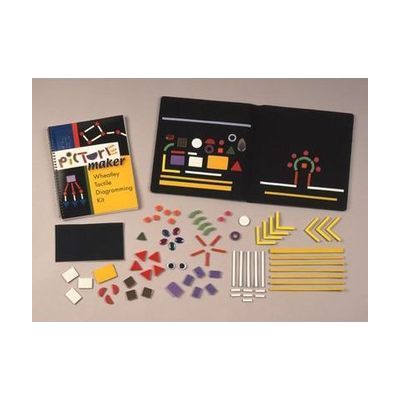
Picture Maker Wheatley Tactile Diagramming Kit
by American Printing House for the Blind
Last verified June 15, 2026 · classified May 23, 2026
What it is
Summary
AI-generated from vendor-published content · May 23, 2026
The Picture Maker Wheatley Tactile Diagramming Kit lets blind and low-vision users create raised-line diagrams by hand — maps, geometric shapes, charts, graphs, and other spatial illustrations — using a rubber work surface and plastic drawing tools that produce tactile lines you can feel. It's primarily aimed at students and educators who need an accessible way to work with visual-spatial content like geography maps or math diagrams without relying on pre-made tactile graphics. This is a complete, self-contained kit with the drawing board and tools included, so no additional devices are required. The tradeoff is that it produces tactile output only for the person drawing — it's a production tool, not a duplication system, so each copy needs to be made individually.
Quick Facts Catalog facts · auto-generated
- AT Act lending
- Out of pocket
- School district
- Vocational rehab
What Setup Looks Like
- Out of the box
- Place the rubber mat on the Wheatley board work surface.
- Use the included plastic drawing stylus and shape templates to press raised lines into the mat — results are immediately felt by touch.
- With a guide
- Review APH's instructional materials on tactile diagramming techniques for maps, charts, and geometric shapes.
- Practice with included templates to build consistent line quality before introducing to a student (allow 20–30 minutes of familiarization). See manufacturer support resources for detailed instructions.
Getting it
Try Before You Buy
Devices like this are often available to borrow through your state's AT Act program — typically free or low-cost — so you can try it before buying or pursuing funding.
Where to Get It
Some links may be affiliate links — WhatCanHelp may earn a small commission from purchases at no extra cost to you. More on affiliates →
How to Fund This
Equipment like this is often pursued through official state programs. These are common starting points — each program decides its own eligibility and what it covers, so the first step is always a phone call.
Compare & explore
Sources & fine print
Vendor facts (name, price, platforms, vendor link) sourced from American Printing House for the Blind — view on vendor site; last verified June 15, 2026.
Classification & description AI-generated from vendor-published content on May 23, 2026 · confidence: high. Vendor specs may lag; verify before relying on details in a clinical or funding artifact.