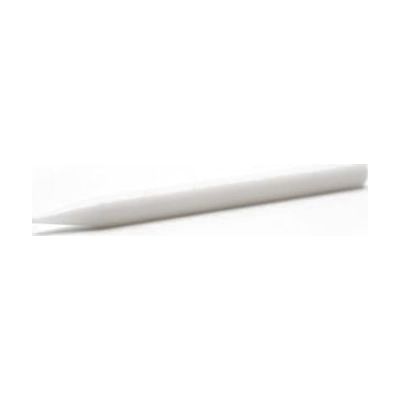
Braille Eraser, Plastic
by American Printing House for the Blind
Price is what the vendor listed when last checked. Confirm it with the vendor before buying.
Last verified September 17, 2026 · classified May 23, 2026
What it is
Summary
AI-generated from vendor-published content · May 23, 2026
A small plastic eraser designed specifically for correcting braille writing — one end flattens mistakenly embossed dots back into the paper so the cell can be re-written. This is a basic but purpose-built consumable for braille learners and users who write braille by hand using a slate and stylus. It's a standalone, single-purpose tool that requires nothing else to use. At four dollars, it's an inexpensive addition to any braille writing kit, but it's a consumable — it wears down with use and will need periodic replacement.
Quick Facts Catalog facts · auto-generated
- AT Act lending
- Out of pocket
- School district
What Setup Looks Like
- Out of the box
Use the broad flat end to press down and flatten mispunched braille dots on paper — no setup required.
Getting it
Try Before You Buy
Devices like this are often available to borrow through your state's AT Act program — typically free or low-cost — so you can try it before buying or pursuing funding.
Where to Get It
This is the vendor WhatCanHelp tracks for this product — it may also be available from other retailers or a local supplier, and prices vary.
Some links may be affiliate links — WhatCanHelp may earn a small commission from purchases at no extra cost to you. More on affiliates →
As an Amazon Associate we earn from qualifying purchases.
Wondering how equipment like this gets paid for? See the official funding programs in your state.
Compare & explore
Sources & fine print
Vendor facts (name, price, platforms, vendor link) sourced from American Printing House for the Blind — view on vendor site; last verified September 17, 2026.
Classification & description AI-generated from vendor-published content on May 23, 2026 · confidence: high. Vendor specs may lag; verify before relying on details in a clinical or funding artifact.