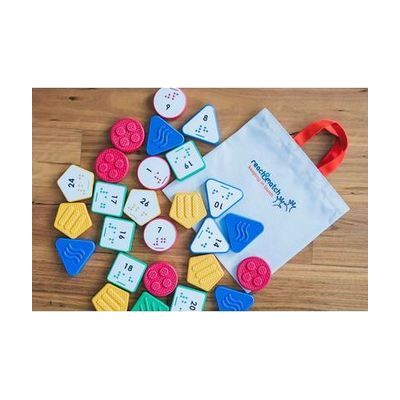
Reach & Match, Number Tiles (UEB & Print)
by American Printing House for the Blind
Last verified June 15, 2026 · classified May 24, 2026
What it is
Summary
AI-generated from vendor-published content · May 24, 2026
These are 26 tactile number tiles designed for children with visual impairments who are learning to read braille numbers alongside print. Each tile pairs a numeral (1–26) with multiple sensory cues — shape, color, texture, and tactile markings in UEB (Unified English Braille) — so learners can access number concepts through touch, sight, or both simultaneously. These tiles are a supplemental component for the Reach & Match Light system and are not a standalone product; you'll need the Reach & Match Light device for full functionality. Parents or teachers new to UEB should plan time to familiarize themselves with the braille numbering conventions before using these in instruction.
Quick Facts Catalog facts · auto-generated
- AT Act lending
- Out of pocket
- School district
- Vocational rehab
What Setup Looks Like
- Out of the box
Tiles can be handled and explored independently right away — each one is self-explanatory by touch. - With a guide
- Pair with the Reach & Match Light device following APH setup instructions.
- Review UEB number conventions to understand the tactile markings on each tile before teaching sessions — allow 30–60 minutes for preparation.
- With professional help
A Teacher of Students with Visual Impairments (TVI) should guide braille literacy instruction sequencing and integrate tiles into the student's IEP goals. See manufacturer support resources for detailed instructions.
Getting it
Try Before You Buy
Devices like this are often available to borrow through your state's AT Act program — typically free or low-cost — so you can try it before buying or pursuing funding.
Where to Get It
Some links may be affiliate links — WhatCanHelp may earn a small commission from purchases at no extra cost to you. More on affiliates →
How to Fund This
Equipment like this is often pursued through official state programs. These are common starting points — each program decides its own eligibility and what it covers, so the first step is always a phone call.
Compare & explore
Sources & fine print
Vendor facts (name, price, platforms, vendor link) sourced from American Printing House for the Blind — view on vendor site; last verified June 15, 2026.
Classification & description AI-generated from vendor-published content on May 24, 2026 · confidence: high. Vendor specs may lag; verify before relying on details in a clinical or funding artifact.