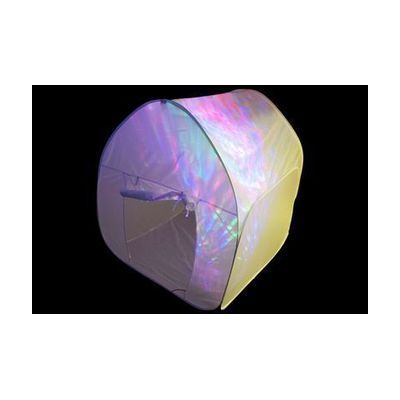
Projection Tent
Last verified June 20, 2026 · classified April 26, 2026
What it is
Summary
AI-generated from vendor-published content · April 26, 2026
A pop-up tent sized for one or two children that creates an enclosed, darkened space where projected light, colors, and images can fill the interior walls and floor. It's designed for children who benefit from immersive sensory environments — particularly those with autism, sensory processing differences, or complex communication needs — where a contained visual space helps with regulation, exploration, or cause-and-effect learning with light projectors. The tent itself is just the enclosure: to get the sensory experience, you'll need a compatible projector (such as an ocean wave, star, or laser projector) placed inside or aimed at the interior. Worth noting: at roughly 105cm × 100cm × 116cm, this is sized for children or small adults in a seated or floor position, not a full standing enclosure for older users.
Quick Facts Catalog facts · auto-generated
- AT Act lending
- Medicaid waiver
- Out of pocket
- School district
What Setup Looks Like
- Out of the box
Pop open the tent — it uses a spring-fold mechanism and sets up in seconds without tools. - With a guide
- Position the tent in a low-light room for best projection effect.
- Place a compatible projector inside or aimed at the interior surface.
- Fold and store using the included fold-down mechanism — takes 2–5 minutes the first time. See manufacturer support resources for detailed folding instructions.
- With professional help
- An occupational therapist (OT) or sensory integration specialist can advise on how to incorporate the tent into a sensory diet or therapeutic routine.
- If used for AAC or switch-based cause-and-effect activities, an ATP or SLP can help select appropriate projectors and interaction tools — typically 1 session.
Getting it
Try Before You Buy
Devices like this are often available to borrow through your state's AT Act program — typically free or low-cost — so you can try it before buying or pursuing funding.
Where to Get It
Some links may be affiliate links — WhatCanHelp may earn a small commission from purchases at no extra cost to you. More on affiliates →
As an Amazon Associate we earn from qualifying purchases.
How to Fund This
Equipment like this is often pursued through official state programs. These are common starting points — each program decides its own eligibility and what it covers, so the first step is always a phone call.
Compare & explore
Sources & fine print
Vendor facts (name, price, platforms, vendor link) sourced from Inclusive Technology — view on vendor site; last verified June 20, 2026.
Classification & description AI-generated from vendor-published content on April 26, 2026 · confidence: high. Vendor specs may lag; verify before relying on details in a clinical or funding artifact.