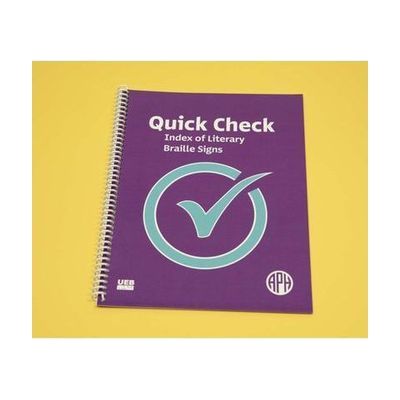
Quick Check: Index of Literary Braille Signs
by American Printing House for the Blind
Last verified June 15, 2026 · classified June 9, 2026
What it is
Summary
AI-generated from vendor-published content · June 9, 2026
A compact reference card or booklet listing all literary braille signs according to the Unified English Braille (UEB) standard — cell patterns, contractions, punctuation, and special indicators laid out for quick lookup. Useful for students learning to read or write braille, sighted teachers and paraprofessionals, and transcribers working between print and braille. This is a standalone, low-tech resource — no devices or setup required, and it works equally well as a desk reference or tucked into a braille lesson kit. At $19 it's an inexpensive addition to any braille instruction toolkit, though it covers literary braille only, so anyone working with Nemeth Code (math/science braille) will need a separate reference.
Quick Facts Catalog facts · auto-generated
- AT Act lending
- Out of pocket
- School district
- Vocational rehab
What Setup Looks Like
- Out of the box
Open the reference card and look up the braille sign or contraction you need — no setup required.
Getting it
Try Before You Buy
Devices like this are often available to borrow through your state's AT Act program — typically free or low-cost — so you can try it before buying or pursuing funding.
Where to Get It
Some links may be affiliate links — WhatCanHelp may earn a small commission from purchases at no extra cost to you. More on affiliates →
How to Fund This
Equipment like this is often pursued through official state programs. These are common starting points — each program decides its own eligibility and what it covers, so the first step is always a phone call.
Compare & explore
Sources & fine print
Vendor facts (name, price, platforms, vendor link) sourced from American Printing House for the Blind — view on vendor site; last verified June 15, 2026.
Classification & description AI-generated from vendor-published content on June 9, 2026 · confidence: high. Vendor specs may lag; verify before relying on details in a clinical or funding artifact.