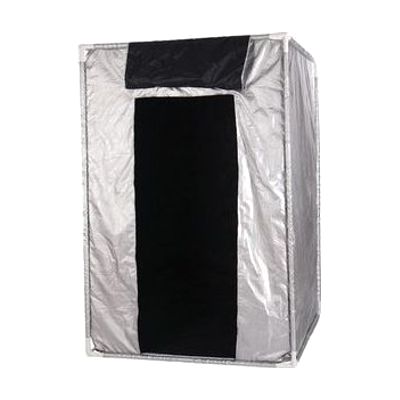
Giant Dark Den
Price is what the vendor listed when last checked. Confirm it with the vendor before buying.
Last verified September 16, 2026 · classified April 26, 2026
What it is
Summary
AI-generated from vendor-published content · April 26, 2026
The Giant Dark Den is a large, tent-like enclosure that blocks out ambient light to create a controlled dark environment for sensory activities — think fiber optics, glowing toys, UV materials, and torches used inside a blackout space roughly the size of a small walk-in closet (about 4ft x 4ft x 6ft tall). It's designed for children and adults who benefit from reduced visual stimulation or who engage more readily with light-based sensory tools in a distraction-free setting, including people with autism, sensory processing differences, or complex communication needs. The structure assembles from poles and connectors like a camping tent and folds back into a storage bag, so it can move between classrooms, therapy rooms, or home. This is just the enclosure — the sensory equipment (fiber optics, projectors, light-up objects) that makes it truly useful is sold separately, and costs can add up quickly.
Quick Facts Catalog facts · auto-generated
- AT Act lending
- Medicaid waiver
- Out of pocket
- School district
What Setup Looks Like
- Out of the box
Unfold the den, insert the poles into the connectors, and attach the nylon double-skin shell — similar to assembling a pop-up tent. - With a guide
- Follow the included assembly instructions to correctly route poles through the sleeve channels for a stable, freestanding structure.
- Open side flaps to test observation sightlines before first use with a participant.
- Allow 15–20 minutes for first assembly; subsequent setups typically take under 10 minutes. See manufacturer support resources for detailed instructions.
- With professional help
- An occupational therapist (OT) or sensory integration specialist can advise on appropriate sensory tools to use inside the den and how to introduce the dark environment gradually for users who may find it overwhelming.
- For school or clinical settings, an AT specialist or SLP may help integrate the den into a sensory diet or therapy program.
Getting it
Try Before You Buy
Devices like this are often available to borrow through your state's AT Act program — typically free or low-cost — so you can try it before buying or pursuing funding.
Where to Get It
This is the vendor WhatCanHelp tracks for this product — it may also be available from other retailers or a local supplier, and prices vary.
Some links may be affiliate links — WhatCanHelp may earn a small commission from purchases at no extra cost to you. More on affiliates →
As an Amazon Associate we earn from qualifying purchases.
How to Fund This
Equipment like this is often pursued through official state programs. These are common starting points — each program decides its own eligibility and what it covers, so the first step is always a phone call.
Compare & explore
Sources & fine print
Vendor facts (name, price, platforms, vendor link) sourced from Inclusive Technology — view on vendor site; last verified September 16, 2026.
Classification & description AI-generated from vendor-published content on April 26, 2026 · confidence: high. Vendor specs may lag; verify before relying on details in a clinical or funding artifact.