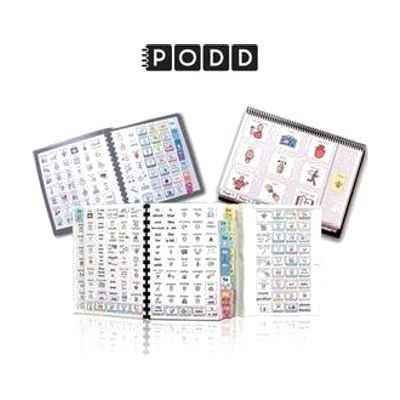
Pragmatic Organisation Dynamic Display (PODD)
Price is what the vendor listed when last checked. Confirm it with the vendor before buying.
Last verified September 16, 2026 · classified April 26, 2026
What it is
Summary
AI-generated from vendor-published content · April 26, 2026
PODD (Pragmatic Organisation Dynamic Display) is a framework and template system for building low-tech symbol-based communication books, developed by speech-language pathologist Gayle Porter. It's designed for people who use symbols to communicate — particularly children with complex communication needs — and covers everything from early functional vocabulary through advanced multi-word syntax. What you're getting is a 3-CD-ROM resource set containing printable templates in Boardmaker format, construction guides, and theoretical background documentation; this is not a ready-made communication book but rather the materials and know-how to build one tailored to an individual. You'll need Boardmaker 6 (sold separately) to customize and print the templates, plus an SLP or AAC specialist to select the right PODD format, personalize vocabulary, and teach both the user and communication partners how to navigate the book effectively.
Quick Facts Catalog facts · auto-generated
- Medicaid waiver
- Out of pocket
- School district
- Vocational rehab
What Setup Looks Like
- Out of the box
Insert CD1 and open the PODD book PDF in Adobe Reader to review the theoretical framework and book selection guidance. - With a guide
- Review the step-by-step guidance documents to identify which of the 14 PODD formats (page layout, cell count) best matches the user's access method and language level.
- Open the appropriate templates in Boardmaker 6, customize vocabulary and symbols for the individual, then print and assemble the physical communication book using the construction guides — allow several hours across multiple sessions.
- With professional help
- An SLP or AAC specialist with PODD training should conduct an AAC assessment to determine the correct format, access method (direct pointing, partner-assisted scanning, pick-up-and-show), and starting vocabulary.
- Ongoing coaching sessions for communication partners (family, teachers, support workers) are essential — PODD books require trained partners to model and support use; expect weeks of implementation support.
- See manufacturer support resources for detailed instructions.
Getting it
Many states lend devices like this for free trial periods — find your state's AT lending program.
Where to Get It
This is the vendor WhatCanHelp tracks for this product — it may also be available from other retailers or a local supplier, and prices vary.
Some links may be affiliate links — WhatCanHelp may earn a small commission from purchases at no extra cost to you. More on affiliates →
As an Amazon Associate we earn from qualifying purchases.
How to Fund This
Equipment like this is often pursued through official state programs. These are common starting points — each program decides its own eligibility and what it covers, so the first step is always a phone call.
Compare & explore
Sources & fine print
Vendor facts (name, price, platforms, vendor link) sourced from Pragmatic Organisation — view on vendor site; last verified September 16, 2026.
Classification & description AI-generated from vendor-published content on April 26, 2026 · confidence: high. Vendor specs may lag; verify before relying on details in a clinical or funding artifact.