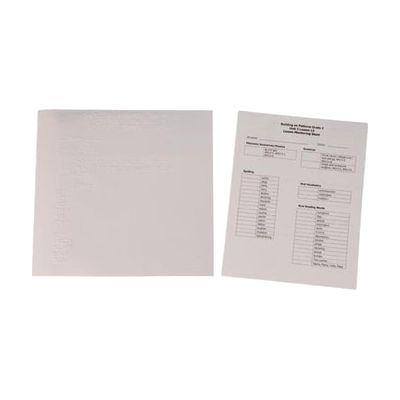
Building on Patterns: Primary Braille Literacy Program: Second Grade: Unit 3 Lesson Monitoring Sheets
by American Printing House for the Blind
Last verified June 15, 2026 · classified June 18, 2026
What it is
Summary
AI-generated from vendor-published content · June 18, 2026
These are replacement lesson monitoring sheets for the second-grade Unit 3 portion of APH's Building on Patterns (BOP) braille literacy curriculum, formatted in Unified English Braille (UEB). Teachers and TVIs use them to track student progress through structured braille reading and writing lessons during the second grade year. This is a consumable replacement component — it only makes sense if you already have or are implementing the full BOP Second Grade Unit 3 kit. If a classroom set has been used up or a sheet is lost, this replaces just that piece rather than requiring repurchase of the entire kit.
Quick Facts Catalog facts · auto-generated
- AT Act lending
- Out of pocket
- School district
What Setup Looks Like
- Out of the box
Insert sheets directly into the existing BOP Second Grade Unit 3 kit binder or lesson folder. - With professional help
- A Teacher of the Visually Impaired (TVI) administers the BOP curriculum and uses these sheets to record lesson-by-lesson progress data.
- Integration into ongoing instruction is handled within established BOP lesson planning — no additional setup beyond the existing curriculum structure.
Getting it
Try Before You Buy
Devices like this are often available to borrow through your state's AT Act program — typically free or low-cost — so you can try it before buying or pursuing funding.
Where to Get It
Some links may be affiliate links — WhatCanHelp may earn a small commission from purchases at no extra cost to you. More on affiliates →
Wondering how equipment like this gets paid for? See the official funding programs in your state.
Compare & explore
Sources & fine print
Vendor facts (name, price, platforms, vendor link) sourced from American Printing House for the Blind — view on vendor site; last verified June 15, 2026.
Classification & description AI-generated from vendor-published content on June 18, 2026 · confidence: high. Vendor specs may lag; verify before relying on details in a clinical or funding artifact.