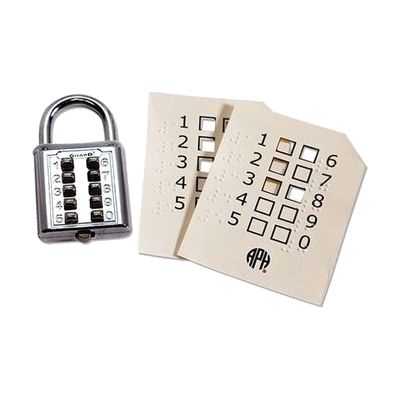
Push Button Padlock
by American Printing House for the Blind
Last verified July 3, 2026 · classified July 6, 2026
What it is
Summary
AI-generated from vendor-published content · July 6, 2026
A padlock that opens by pressing a series of buttons rather than reading a numbered dial — designed for people who can't see or read the tiny markings on a standard combination lock. The combination is provided on two cards printed in both large print and braille, so users can read and memorize it without sighted assistance. This is a complete, ready-to-use solution: no setup, no apps, no accessories required. The tradeoff is that push-button padlocks generally offer a smaller number of possible combinations than traditional dial locks, which makes them slightly easier to force — a reasonable tradeoff for everyday use like a gym locker or school locker, but not ideal for high-security applications.
Quick Facts Catalog facts · auto-generated
- AT Act lending
- Out of pocket
- School district
- Vocational rehab
What Setup Looks Like
- Out of the box
- Receive the lock with combination cards in large print and braille.
- Memorize or retain your combination card, then press the buttons in sequence to open — no programming needed.
Getting it
Try Before You Buy
Devices like this are often available to borrow through your state's AT Act program — typically free or low-cost — so you can try it before buying or pursuing funding.
Where to Get It
Some links may be affiliate links — WhatCanHelp may earn a small commission from purchases at no extra cost to you. More on affiliates →
How to Fund This
Equipment like this is often pursued through official state programs. These are common starting points — each program decides its own eligibility and what it covers, so the first step is always a phone call.
Compare & explore
Sources & fine print
Vendor facts (name, price, platforms, vendor link) sourced from American Printing House for the Blind — view on vendor site; last verified July 3, 2026.
Classification & description AI-generated from vendor-published content on July 6, 2026 · confidence: high. Vendor specs may lag; verify before relying on details in a clinical or funding artifact.