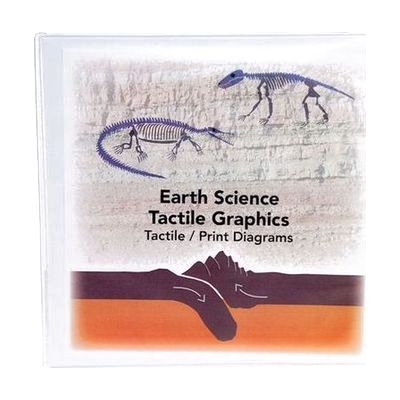
Earth Science Tactile Graphics
by American Printing House for the Blind
Last verified July 3, 2026 · classified July 6, 2026
What it is
Summary
AI-generated from vendor-published content · July 6, 2026
This is a set of raised-line tactile graphics covering the core content of a middle and high school Earth Science curriculum — things like rock cycles, tectonic plates, weather patterns, and geologic structures rendered so a student who is blind or has low vision can explore them through touch. APH produces these on specialized paper or thermoform plastic that holds precise raised details, making scientific diagrams accessible in a way that verbal description alone rarely achieves. This is a classroom or resource room tool, not a standalone curriculum — it works alongside a teacher, a brailleist, or a vision specialist who can guide the student through each diagram in context. Sets like this typically don't cover every diagram a sighted student encounters in a textbook, so the teacher of the visually impaired (TVI) will need to identify and possibly supplement gaps.
Quick Facts Catalog facts · auto-generated
- AT Act lending
- Out of pocket
- School district
- Vocational rehab
What Setup Looks Like
- Out of the box
Open the set and sort graphics by unit or topic to match the course sequence. - With a guide
- Cross-reference the included graphics with the classroom textbook to identify coverage gaps.
- Label or organize materials using a system the student can navigate independently — plan for 30–60 minutes.
- With professional help
- A Teacher of the Visually Impaired (TVI) should introduce each graphic to the student, teaching tactile exploration strategies and connecting raised images to the concepts being taught in class.
- Ongoing use is most effective when the TVI coordinates with the science teacher to align graphics to lesson timing. See manufacturer support resources for detailed instructions.
Getting it
Try Before You Buy
Devices like this are often available to borrow through your state's AT Act program — typically free or low-cost — so you can try it before buying or pursuing funding.
Where to Get It
Some links may be affiliate links — WhatCanHelp may earn a small commission from purchases at no extra cost to you. More on affiliates →
How to Fund This
Equipment like this is often pursued through official state programs. These are common starting points — each program decides its own eligibility and what it covers, so the first step is always a phone call.
Compare & explore
Sources & fine print
Vendor facts (name, price, platforms, vendor link) sourced from American Printing House for the Blind — view on vendor site; last verified July 3, 2026.
Classification & description AI-generated from vendor-published content on July 6, 2026 · confidence: high. Vendor specs may lag; verify before relying on details in a clinical or funding artifact.