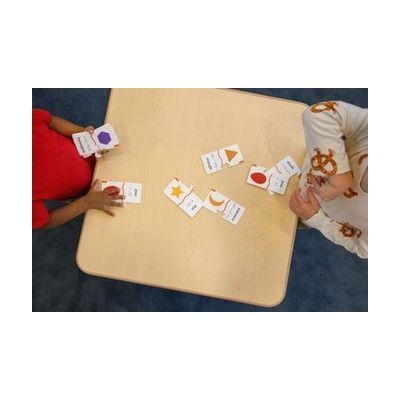
Memory Puzzles: Shapes, English Edition
by American Printing House for the Blind
Last verified July 3, 2026 · classified July 6, 2026
What it is
Summary
AI-generated from vendor-published content · July 6, 2026
A tactile matching game where players find pairs of shape puzzle pieces, each labeled in both print and braille. Designed for young children who are blind or have low vision, it builds foundational skills — shape recognition, memory, and problem-solving — through hands-on play rather than screen-based learning. The set comes with 52 pieces forming 26 matching pairs, all stored in a washable pouch, so it's ready to use as a standalone activity with no additional materials needed. The braille labels make it genuinely accessible for blind learners, but sighted peers and siblings can participate too, making it useful in inclusive classroom and family settings. At this price point, it's a specialized item — parents or teachers looking for a general shape-sorting toy will find cheaper options, but the braille integration is the point.
Quick Facts Catalog facts · auto-generated
- AT Act lending
- Out of pocket
- School district
What Setup Looks Like
- Out of the box
Open the pouch, spread out the 52 puzzle pieces, and begin matching by shape and label — no assembly or setup required.
Getting it
Try Before You Buy
Devices like this are often available to borrow through your state's AT Act program — typically free or low-cost — so you can try it before buying or pursuing funding.
Where to Get It
Some links may be affiliate links — WhatCanHelp may earn a small commission from purchases at no extra cost to you. More on affiliates →
Wondering how equipment like this gets paid for? See the official funding programs in your state.
Compare & explore
Sources & fine print
Vendor facts (name, price, platforms, vendor link) sourced from American Printing House for the Blind — view on vendor site; last verified July 3, 2026.
Classification & description AI-generated from vendor-published content on July 6, 2026 · confidence: high. Vendor specs may lag; verify before relying on details in a clinical or funding artifact.