Hundred Boards and Manipulatives, UEB Edition
by American Printing House for the Blind
Last verified July 3, 2026 · classified July 6, 2026
What it is
Summary
AI-generated from vendor-published content · July 6, 2026
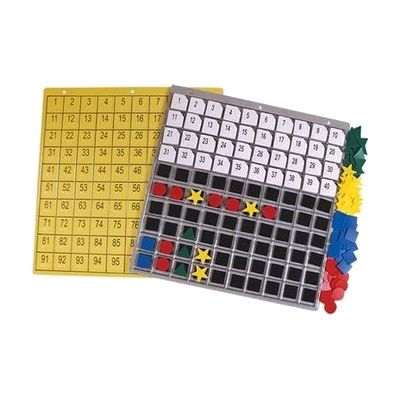
This is a tactile math kit built around a hundreds board concept — a 10x10 grid used in elementary math education — adapted for students who are blind or have low vision. The numbered tiles (1–100) include both standard print and UEB braille, so a braille-reading student and a sighted peer or teacher can work from the same materials in the same classroom. The kit includes a reference board with pre-printed numbers, a blank grid board for independent work, and four sets of shape manipulatives in distinct colors and forms for patterning and counting activities. The angled corner on each number tile helps students orient the piece correctly by touch alone. This is a complete, ready-to-use classroom kit — no additional materials are required, though a teacher or vision specialist will typically structure activities around IEP math goals.
Quick Facts Catalog facts · auto-generated
- AT Act lending
- Out of pocket
- School district
- Vocational rehab
What Setup Looks Like
- Out of the box
Open storage bags, place tiles on the grid board, and begin patterning or number activities. - With a guide
- Review the included activity suggestions to plan lessons around patterning, number sequencing, or place value.
- Arrange the number line strip and loop material to extend activities beyond the grid board.
- Allow 15–20 minutes to familiarize students with the orientation cue (angled corner) on number tiles before first use.
- With professional help
- A Teacher of the Visually Impaired (TVI) or special education teacher integrates the kit into math instruction aligned with the student's IEP goals.
- A TVI may also guide the student in UEB number recognition as a literacy support activity alongside math.
Getting it
Try Before You Buy
Devices like this are often available to borrow through your state's AT Act program — typically free or low-cost — so you can try it before buying or pursuing funding.
Where to Get It
Some links may be affiliate links — WhatCanHelp may earn a small commission from purchases at no extra cost to you. More on affiliates →
How to Fund This
Equipment like this is often pursued through official state programs. These are common starting points — each program decides its own eligibility and what it covers, so the first step is always a phone call.
Compare & explore
Sources & fine print
Vendor facts (name, price, platforms, vendor link) sourced from American Printing House for the Blind — view on vendor site; last verified July 3, 2026.
Classification & description AI-generated from vendor-published content on July 6, 2026 · confidence: high. Vendor specs may lag; verify before relying on details in a clinical or funding artifact.