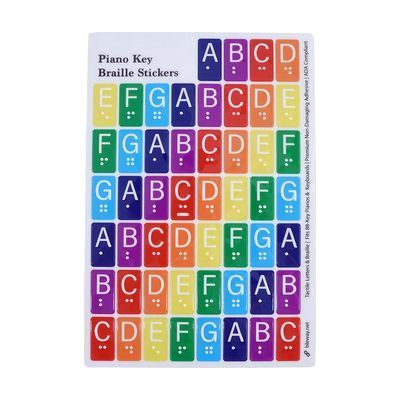
Piano Key Braille Stickers
by BLEWAY
Price is what the vendor listed when last checked. Confirm it with the vendor before buying.
What it is
Summary
AI-generated from vendor-published content · November 2, 2026
These peel-and-stick labels turn a piano or electronic keyboard into one a blind or low vision player can find their way around by touch. Each label has raised braille and a raised letter for its note, plus a different color for each note, so the keys are easy to feel and easy to see. The set is sized for a full 88-key keyboard and is also said to fit 61, 54, 49 and 37-key instruments. The stickers are made of PET material with an adhesive that is meant to come off cleanly, and you can apply them in a few minutes without tools. They help with learning note names and keyboard layout, but they do not teach music or read braille music for you. A teacher or family member will likely need to help the first time, since each label has to line up with the right key.
Getting it
Where to get it
This is the vendor WhatCanHelp tracks for this product — it may also be available from other retailers or a local supplier, and prices vary.
How to fund this
These are common places to ask about paying for equipment like this. Each one decides its own eligibility and what it covers, so start by asking them.
Details
Quick Facts Catalog facts · auto-generated
- Addresses
- Platform
- Age range
- Complexity
- Ready to use
- Price
- $23.95
- Funding
- Out of pocket
- School district
What setup looks like
- Out of the box
- Peel each label and press it onto its matching key, then check that the note letters line up from the first key.
- Plan on a few minutes for a smaller keyboard and a bit longer for a full 88-key piano.
Compare & explore
Sources & fine print
Vendor facts (name, price, platforms, vendor link) sourced from MaxiAids — view on vendor site (opens in a new tab); last checked November 2, 2026.
Classification & description AI-generated from vendor-published content on November 2, 2026 · confidence: high. Vendor specs may lag; verify before relying on details in a clinical or funding artifact.