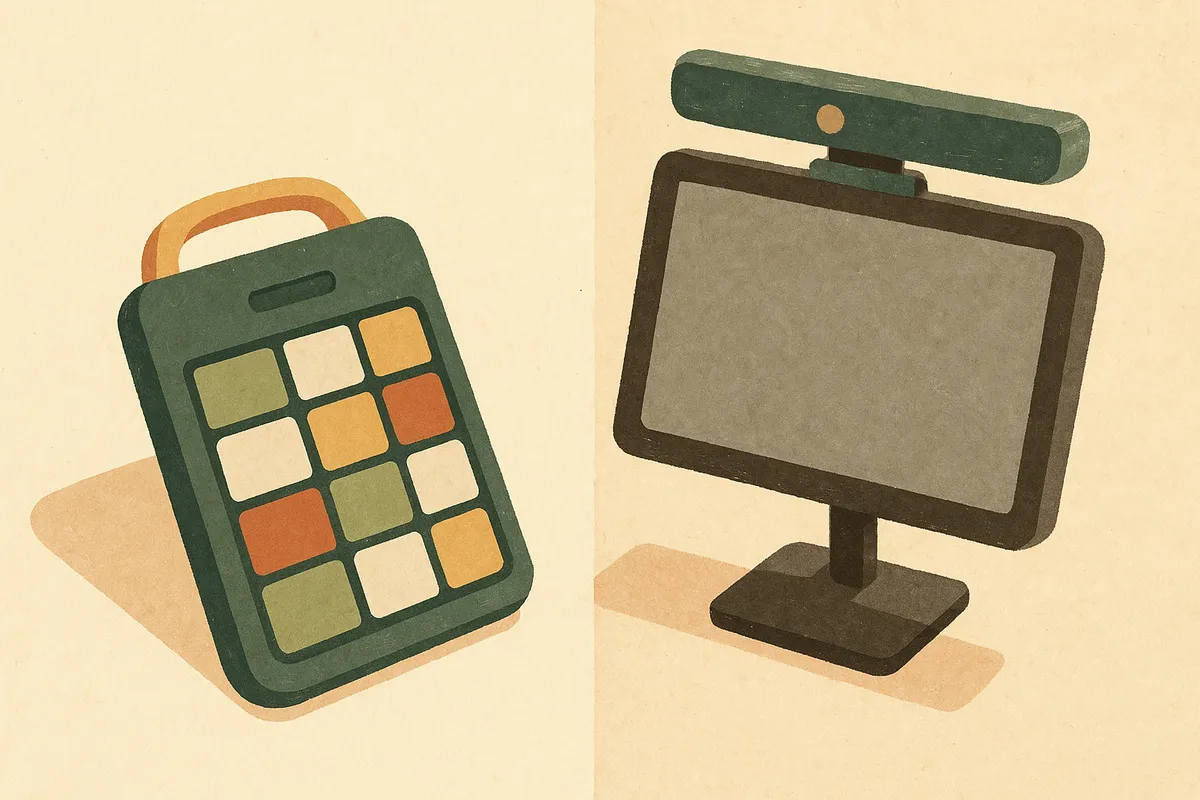
Here's the situation: someone in your life needs a way to communicate, and you're looking at dedicated AAC (augmentative and alternative communication) devices. These two products both give a person a voice — but they solve fundamentally different problems, for fundamentally different people. Comparing them isn't really about which is "better." It's about understanding which problem you're actually trying to solve.
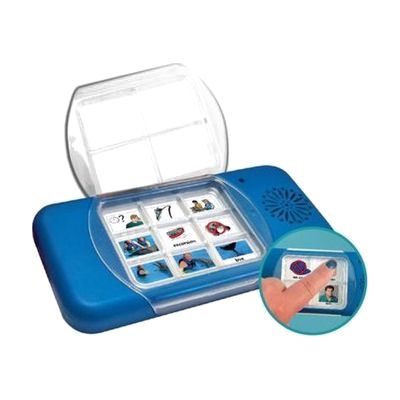 The Go Talk Fit is a handheld communicator with pre-recorded messages. The PRC-Saltillo Eye Tracking system lets someone control a full communication device using only their eyes. They're both AAC. They're both dedicated hardware. Beyond that, they diverge sharply. Let's dig in.
Side-by-Side Overview
| Go Talk Fit | PRC-Saltillo Eye Tracking | |
|---|---|---|
| Price | $99 | $500 – $2,000 (eye tracking hardware only — the Accent device it pairs with is a separate cost) |
| What it does | Plays back pre-recorded spoken messages (up to 27) | Enables hands-free eye gaze control of a full AAC communication system |
| Who it's for | People who need portable, simple communication for predictable daily situations | People with little or no reliable hand/arm movement (ALS, severe CP, spinal cord injury) |
| How it's accessed | Pressing message squares with a hand or finger | Eye gaze — no hand use required |
| Setup complexity | Low — a caregiver can handle basics, though an SLP can help with vocabulary selection | High — clinical assessment and ongoing calibration by an ATP or SLP is essential |
| Platform | Standalone dedicated device — no phone or computer needed | Mounts to PRC-Saltillo Accent series devices |
| Message capacity | 12 or 27 pre-recorded messages | Full vocabulary system (thousands of words/phrases) |
| Portability | Compact, fits in a hand or pocket | Mounted to a larger communication device, typically on a wheelchair |
| Funding options | AT Act lending, Medicaid waiver, school district, vocational rehab, out of pocket | Insurance, AT Act lending, Medicaid waiver, school district, vocational rehab, out of pocket |
Go Talk Fit: Simple, Portable, Ready Now
The Go Talk Fit does one thing and does it reliably: it speaks pre-recorded messages when someone presses a square. You record greetings, requests, social phrases — whatever the person needs most — onto color-coded levels. Press the square, hear the message. No software updates, no internet connection, no learning curve for the person using it. It's the kind of device that can go from unboxed to in-use within an hour.
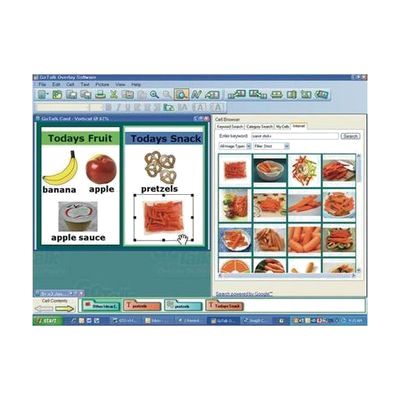 That simplicity is its greatest strength and its most obvious limitation. With a maximum of 27 stored messages, you're working within tight boundaries. This isn't a device for someone who needs to construct novel sentences or express complex thoughts. It's a device for someone whose daily communication needs are relatively predictable: "I need help," "Yes please," "I want to go," "Thank you." If those needs change frequently, you're re-recording messages and reprinting overlays — manageable, but not effortless. (Attainment Company does offer GoTalk Overlay Software to make creating and printing overlays easier, though it's a separate purchase.)
Where the Go Talk Fit genuinely shines is in community settings. It's small enough to carry, tough enough to handle being dropped, and intuitive enough that communication partners don't need training to understand what's happening. For a child in school who needs a way to participate in predictable classroom routines, or an adult who wants to communicate basic needs at medical appointments, it removes barriers without adding technological complexity.
A speech-language pathologist can make a real difference in vocabulary selection and level organization — the difference between a device that collects dust and one that becomes indispensable. But if you're a caregiver who understands the person's daily life well, you can absolutely get started on your own and refine from there. At $99, the financial risk is low.
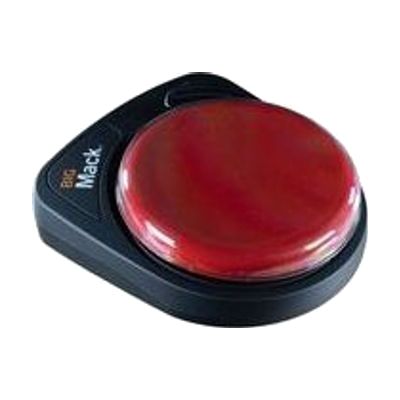 Worth knowing: If someone needs even fewer messages — just one or two key phrases — a simpler single-message device like the BIGmack or LITTLEmack from AbleNet might be a better starting point. And if the person is ready for more messages and a slightly larger footprint, the Go Talk Go is another option in the same family worth exploring.
PRC-Saltillo Eye Tracking: Full Communication for People Who Can't Use Their Hands
 The PRC-Saltillo eye tracking system exists to solve a problem that the Go Talk Fit simply cannot: how does someone communicate when they can't reliably press a button? For people living with ALS, severe cerebral palsy, high-level spinal cord injuries, or other conditions that significantly limit hand and arm movement, eye gaze may be the only reliable access method available. This system lets someone look at letters, words, or symbols on a screen to build and speak complete messages — no hand movement required.
This is a fundamentally more powerful communication tool. Paired with a PRC-Saltillo Accent device, a person can access robust vocabulary systems with thousands of words, construct original sentences, and communicate thoughts that no one pre-recorded for them. The expressive range isn't even comparable to a 27-message device — it's a different category entirely. For someone with intact cognition but severely limited motor control, this kind of system can be transformative.
But that power comes with real demands. Calibration — the process of teaching the device to track a specific person's eye movements — takes time, patience, and expertise. Lighting conditions matter. Head positioning matters. Seating matters. If any of these variables shift, accuracy can degrade quickly. This isn't a plug-and-play experience. An assistive technology professional (ATP) or SLP isn't just helpful here; they're essential. Expect multiple sessions over weeks to get things dialed in, and ongoing adjustments as the person's condition or positioning changes.
The cost reflects this complexity. At $500 to $2,000 for the eye tracking hardware alone — before factoring in the Accent device it pairs with, which can run several thousand dollars more — this is a significant investment. The good news is that insurance coverage is a realistic funding path for eye tracking systems in a way that it often isn't for simpler devices. Medicaid waivers, vocational rehab, and school district funding are also options. Most people don't pay for this entirely out of pocket, but the funding process can take weeks or months, so plan ahead.
Which Should You Choose?
These products serve such different situations that if you're genuinely torn between them, the most useful thing you can do is clarify the person's needs first. Here's a straightforward decision framework:
The Go Talk Fit is likely the right choice if:
- The person can reliably press a button with a hand, finger, or fist
- Communication needs are predictable and routine — common phrases, wants, and social exchanges
- You need something portable and rugged for school, errands, or appointments
- You want a low-cost entry point into AAC without a lengthy setup process
- The person may eventually move to a more robust system, and this serves as a bridge or supplement
PRC-Saltillo Eye Tracking is likely the right choice if:
- The person cannot reliably use their hands to access a device
- They need to express original thoughts — not just play back pre-selected messages
- There is access to an ATP or SLP who can assess, calibrate, and provide ongoing support
- The person has adequate visual acuity and some head stability (the system needs both to work)
- You're prepared for a longer setup timeline and can pursue funding through insurance or Medicaid
One more thing worth saying plainly:
These aren't competing products — they're answers to different questions. A person who benefits from the Go Talk Fit typically wouldn't be well-served by eye tracking, and vice versa. The Go Talk Fit asks, "Can we give someone quick, simple access to their most-used phrases?" The PRC-Saltillo eye tracking system asks, "How do we give someone full expressive communication when their body won't cooperate?" If you're unsure which question matches your situation, that's a strong signal to consult an SLP or assistive technology specialist before purchasing anything.
For some people, both products might play a role at different moments — a Go Talk Fit as a portable backup for quick interactions in the community, and an eye tracking system as the primary communication tool at home. Real-world AAC often involves more than one device.
Explore Both Products
Learn more about each option and see if it fits your situation:
- Go Talk Fit by Attainment Company — $99, portable pre-recorded message communicator
- Eye Tracking by PRC-Saltillo — $500–$2,000, hands-free eye gaze access for full AAC systems
If you're exploring AAC options on a budget, you might also find our earlier post on Assistive Technology Under $100 That Actually Makes a Difference helpful for context on what's available at lower price points.
WhatCanHelp.com helps you explore options — it does not replace a professional AT assessment.