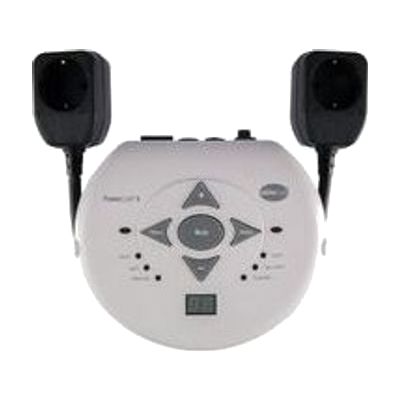
PowerLink 4 (Central Europe)
by AbleNet
Price is what the vendor listed when last checked. Confirm it with the vendor before buying.
Last verified September 17, 2026 · classified April 26, 2026
What it is
Summary
AI-generated from vendor-published content · April 26, 2026
The PowerLink 4 is a switch-controlled power outlet that lets a person turn on and off standard electrical appliances — a fan, blender, toy, or light — using a single adapted switch instead of a hand. It connects between the wall outlet and the appliance, and the switch plugs into one of its two input jacks. This is a good fit for someone with significant motor limitations who can activate a switch but cannot manipulate regular plugs or controls, or for therapists building cause-and-effect understanding with learners at early cognitive levels. You get a self-contained unit with a built-in display for programming six control modes — including timed operation, latch, and a count mode for tracking activations during therapy data collection. This Central Europe version is built for European-standard power sockets and voltages, so it won't work with North American outlets; make sure you're ordering the right regional version.
Quick Facts Catalog facts · auto-generated
- AT Act lending
- Medicaid waiver
- Out of pocket
- School district
- Vocational rehab
What Setup Looks Like
- Out of the box
Plug the PowerLink into a European wall outlet and connect the appliance to the PowerLink's controlled outlet. - With a guide
- Use the built-in display and buttons to select one of six control modes (Direct, Count, Two-Switch, Timed Seconds, Timed Minutes, or Latch).
- Plug a compatible single switch into one of the two input jacks, or link a wireless Big or Jelly Beamer switch to the unit.
- Test the appliance activation with the switch to confirm correct mode and timing — allow 15–30 minutes for initial configuration. See manufacturer support resources for detailed instructions.
- With professional help
- An occupational therapist (OT) or ATP can recommend the appropriate control mode and switch type based on the user's motor capabilities and therapeutic goals.
- For cause-and-effect therapy programs, a special education teacher or OT can use Count mode to set up and track session data — typically integrated during 1–2 school or clinical visits.
Getting it
Try Before You Buy
Devices like this are often available to borrow through your state's AT Act program — typically free or low-cost — so you can try it before buying or pursuing funding.
Where to Get It
This is the vendor WhatCanHelp tracks for this product — it may also be available from other retailers or a local supplier, and prices vary.
Some links may be affiliate links — WhatCanHelp may earn a small commission from purchases at no extra cost to you. More on affiliates →
As an Amazon Associate we earn from qualifying purchases.
How to Fund This
Equipment like this is often pursued through official state programs. These are common starting points — each program decides its own eligibility and what it covers, so the first step is always a phone call.
Compare & explore
Sources & fine print
Vendor facts (name, price, platforms, vendor link) sourced from AbleNet — view on vendor site; last verified September 17, 2026.
Classification & description AI-generated from vendor-published content on April 26, 2026 · confidence: high. Vendor specs may lag; verify before relying on details in a clinical or funding artifact.