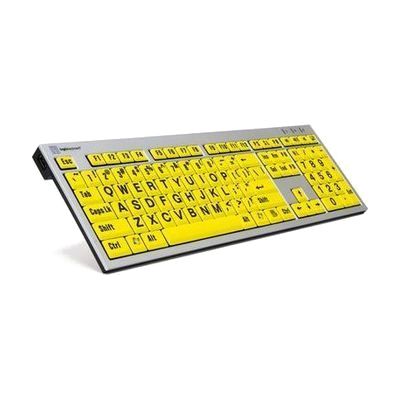
LogicKeys L. P. Slim Line PC Keyboard
by LogicKeys
Price is what the vendor listed when last checked. Confirm it with the vendor before buying.
Last verified September 20, 2026 · classified April 26, 2026
What it is
Summary
AI-generated from vendor-published content · April 26, 2026
This is a standard PC keyboard with oversized, high-contrast key labels designed to make letters and symbols visible without needing to lean in or guess. It comes in two color combinations — yellow print on black keys, or black print on yellow keys — both of which are classic high-contrast pairings proven to be easier to read for people with low vision. It's a complete, plug-in solution for anyone who struggles to read standard keyboard labels, whether due to macular degeneration, glare sensitivity, or general age-related vision changes. This is a Windows-only keyboard with a traditional wired connection, so it won't work for Mac users or those looking for a wireless option.
Quick Facts Catalog facts · auto-generated
- AT Act lending
- Out of pocket
- Vocational rehab
What Setup Looks Like
- Out of the box
Plug the keyboard into a USB port on your Windows PC — it should be recognized automatically with no software needed.
Getting it
Try Before You Buy
Devices like this are often available to borrow through your state's AT Act program — typically free or low-cost — so you can try it before buying or pursuing funding.
Where to Get It
This is the vendor WhatCanHelp tracks for this product — it may also be available from other retailers or a local supplier, and prices vary.
Some links may be affiliate links — WhatCanHelp may earn a small commission from purchases at no extra cost to you. More on affiliates →
As an Amazon Associate we earn from qualifying purchases.
How to Fund This
Equipment like this is often pursued through official state programs. These are common starting points — each program decides its own eligibility and what it covers, so the first step is always a phone call.
Compare & explore
Sources & fine print
Vendor facts (name, price, platforms, vendor link) sourced from LogicKeys — view on vendor site; last verified September 20, 2026.
Classification & description AI-generated from vendor-published content on April 26, 2026 · confidence: high. Vendor specs may lag; verify before relying on details in a clinical or funding artifact.