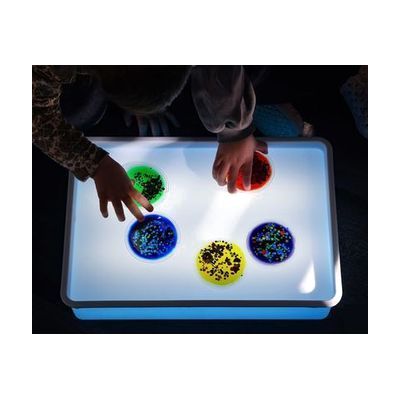
Sensa Light Box
Last verified June 20, 2026 · classified May 9, 2026
What it is
Summary
AI-generated from vendor-published content · May 9, 2026
A backlit tray about 13 by 18 inches that creates a glowing surface for sensory and creative activities — children draw patterns in sand, arrange translucent shapes, or explore how light interacts with different materials placed on it. It's designed for kids who benefit from sensory-based learning experiences, particularly those working on tactile tolerance, fine motor development, or cause-and-effect exploration through light and texture. The kit arrives with sand, a small dustpan, and brush, so there's enough to get started immediately, though many users supplement with translucent manipulatives sold separately. The tray is only about 1.8cm deep, which keeps sand reasonably contained but still requires a flat surface and adult supervision — this isn't a fully mess-free experience.
Quick Facts Catalog facts · auto-generated
- AT Act lending
- Medicaid waiver
- Out of pocket
- School district
What Setup Looks Like
- Out of the box
- Connect the included USB cable to a power source to activate the backlit surface.
- Pour sand from the included bags into the shallow tray and begin tactile exploration.
- With a guide
- Identify sensory or fine motor goals (e.g., tactile tolerance, bilateral hand use, mark-making) to guide activity selection.
- Explore activity ideas from Inclusive Technology's support resources or occupational therapy sensory play guides — most structured activity sessions can be planned in 15–30 minutes. See manufacturer support resources for detailed instructions.
- With professional help
- An occupational therapist (OT) can help determine whether this light box is appropriate for a child's specific sensory profile and integrate it into a broader sensory diet or fine motor program.
- Expect 1–2 OT consultations to establish appropriate use parameters and activity progression.
Getting it
Try Before You Buy
Devices like this are often available to borrow through your state's AT Act program — typically free or low-cost — so you can try it before buying or pursuing funding.
Where to Get It
Some links may be affiliate links — WhatCanHelp may earn a small commission from purchases at no extra cost to you. More on affiliates →
How to Fund This
Equipment like this is often pursued through official state programs. These are common starting points — each program decides its own eligibility and what it covers, so the first step is always a phone call.
Compare & explore
Sources & fine print
Vendor facts (name, price, platforms, vendor link) sourced from Inclusive Technology — view on vendor site; last verified June 20, 2026.
Classification & description AI-generated from vendor-published content on May 9, 2026 · confidence: high. Vendor specs may lag; verify before relying on details in a clinical or funding artifact.