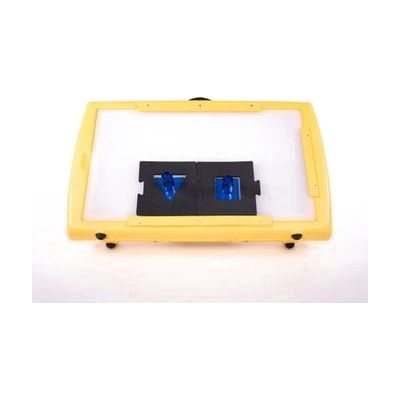
LED Light Box
by American Printing House for the Blind
Last verified July 30, 2026 · classified May 23, 2026
What it is
Summary
AI-generated from vendor-published content · May 23, 2026
A backlit flat panel that illuminates materials placed on its surface, creating high contrast that makes it easier to see outlines, shapes, and details for people with limited remaining vision. It's designed for students who have some usable sight and need enhanced visual contrast to work on tracing, scanning, sorting, or eye-hand coordination tasks. The box itself is the platform — you'll use it alongside overlays, tracing sheets, and tactile materials (some sold separately) to build out specific visual skill activities. It runs on LED lighting, which keeps the surface cool and even, unlike older fluorescent models that could get warm and flicker.
Quick Facts Catalog facts · auto-generated
- AT Act lending
- Medicaid waiver
- Out of pocket
- School district
What Setup Looks Like
- Out of the box
Plug in and power on the light box, place materials on the illuminated surface. - With a guide
- Review APH's accompanying curriculum or activity guides to plan skill-building sequences.
- Select or prepare overlay materials appropriate to the student's visual and motor goals — allow 20–30 minutes.
- With professional help
- A teacher of the visually impaired (TVI) or orientation and mobility specialist assesses the student's residual vision and selects appropriate activities and overlays.
- Ongoing integration into an IEP or vision therapy program typically requires 2–4 sessions to establish a structured activity sequence.
- See manufacturer support resources for detailed instructions.
Getting it
Try Before You Buy
Devices like this are often available to borrow through your state's AT Act program — typically free or low-cost — so you can try it before buying or pursuing funding.
Where to Get It
This is the vendor WhatCanHelp tracks for this product — it may also be available from other retailers or a local supplier, and prices vary.
Some links may be affiliate links — WhatCanHelp may earn a small commission from purchases at no extra cost to you. More on affiliates →
As an Amazon Associate we earn from qualifying purchases.
How to Fund This
Equipment like this is often pursued through official state programs. These are common starting points — each program decides its own eligibility and what it covers, so the first step is always a phone call.
Compare & explore
Sources & fine print
Vendor facts (name, price, platforms, vendor link) sourced from American Printing House for the Blind — view on vendor site; last verified July 30, 2026.
Classification & description AI-generated from vendor-published content on May 23, 2026 · confidence: high. Vendor specs may lag; verify before relying on details in a clinical or funding artifact.