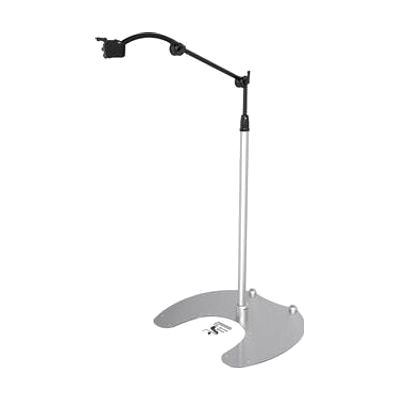
REHAdapt Floor Stand FS Mini
by REHAdapt
Price is what the vendor listed when last checked. Confirm it with the vendor before buying.
Last verified September 16, 2026 · classified April 26, 2026
What it is
Summary
AI-generated from vendor-published content · April 26, 2026
This is a compact, freestanding floor mount designed to hold lightweight AAC devices, tablets, or communication aids in position without requiring a wheelchair or desk surface. It's built for people who need a device positioned consistently at eye level or arm's reach while in bed, on a sofa, or beside a wheelchair — situations where a clamp-style mount won't work. The stand rolls when tilted and has a small flat base footprint, making it practical in tight spaces like a bedside. Important to know before ordering: this stand requires a REHAdapt-compatible mounting plate sold separately, and the load limit of 2kg means it's not suitable for heavier tablets or devices — check your device weight before purchasing.
Quick Facts Catalog facts · auto-generated
- AT Act lending
- Medicaid waiver
- Out of pocket
- School district
- Vocational rehab
What Setup Looks Like
- Out of the box
Tilt the stand to roll it into position beside a bed, sofa, or wheelchair. - With a guide
- Purchase and attach the correct REHAdapt mounting plate (sold separately) to your device.
- Use the UDS Quick Release system to attach the device to the stand arm.
- Adjust the 3D tube arms and QuickShift handles to position the device at the desired angle and height — allow 20–30 minutes for initial positioning. See manufacturer support resources for detailed instructions.
- With professional help
- An occupational therapist (OT) or ATP can evaluate optimal positioning for the user's posture, reach, and viewing angle, particularly when pairing with an eye-gaze or AAC device.
- Expect one session of 30–60 minutes to confirm placement and integration with the user's seating or mobility setup.
Getting it
Try Before You Buy
Devices like this are often available to borrow through your state's AT Act program — typically free or low-cost — so you can try it before buying or pursuing funding.
Where to Get It
This is the vendor WhatCanHelp tracks for this product — it may also be available from other retailers or a local supplier, and prices vary.
Some links may be affiliate links — WhatCanHelp may earn a small commission from purchases at no extra cost to you. More on affiliates →
As an Amazon Associate we earn from qualifying purchases.
How to Fund This
Equipment like this is often pursued through official state programs. These are common starting points — each program decides its own eligibility and what it covers, so the first step is always a phone call.
Compare & explore
Sources & fine print
Vendor facts (name, price, platforms, vendor link) sourced from REHAdapt — view on vendor site; last verified September 16, 2026.
Classification & description AI-generated from vendor-published content on April 26, 2026 · confidence: high. Vendor specs may lag; verify before relying on details in a clinical or funding artifact.