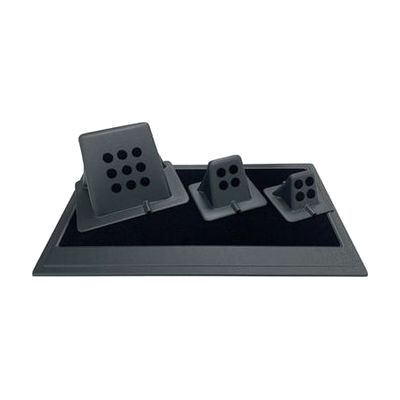
Maxess Mounting System
by Maxess
Last verified June 20, 2026 · classified April 26, 2026
What it is
Summary
AI-generated from vendor-published content · April 26, 2026
The Maxess Mounting System is a cushioned tray-and-mount combination that holds switches or AAC devices in a stable, adjustable position for people who need hands-free or angled access to their communication tools. It's designed for anyone who uses switches or communication devices but struggles to keep them positioned correctly — particularly wheelchair users, people with limited arm control, or children in classroom or therapy settings. The system comes in three tray sizes and includes angled mount inserts at 55° and 85° to fine-tune the surface angle for optimal access; hook-and-loop fastening makes repositioning quick during assessments or trials. Important to know: this is hardware only — switches, communicators, and any wheelchair or desk mounting hardware are sold separately, so budget accordingly.
Quick Facts Catalog facts · auto-generated
- AT Act lending
- Medicaid waiver
- Out of pocket
- School district
- Vocational rehab
What Setup Looks Like
- Out of the box
Place tray on a flat surface and secure a switch using the included hook-and-loop fasteners — no tools required. - With a guide
- Select the appropriate tray size and angled mount insert (55° or 85°) based on the user's reach and posture.
- Attach the mount insert to the tray and fasten the switch or device using the hook-and-loop pack.
- Trial different angles and positions to find the most accessible placement — allow 15–30 minutes for initial positioning trials.
- With professional help
- An occupational therapist (OT) or assistive technology professional (ATP) should assess optimal switch position, tray size, and angle relative to the user's seating and motor access needs.
- Integration with a wheelchair or specialized seating system may require additional mounting hardware and a seating specialist. See manufacturer support resources for detailed instructions.
Getting it
Try Before You Buy
Devices like this are often available to borrow through your state's AT Act program — typically free or low-cost — so you can try it before buying or pursuing funding.
Where to Get It
Some links may be affiliate links — WhatCanHelp may earn a small commission from purchases at no extra cost to you. More on affiliates →
As an Amazon Associate we earn from qualifying purchases.
How to Fund This
Equipment like this is often pursued through official state programs. These are common starting points — each program decides its own eligibility and what it covers, so the first step is always a phone call.
Compare & explore
Sources & fine print
Vendor facts (name, price, platforms, vendor link) sourced from Maxess — view on vendor site; last verified June 20, 2026.
Classification & description AI-generated from vendor-published content on April 26, 2026 · confidence: high. Vendor specs may lag; verify before relying on details in a clinical or funding artifact.