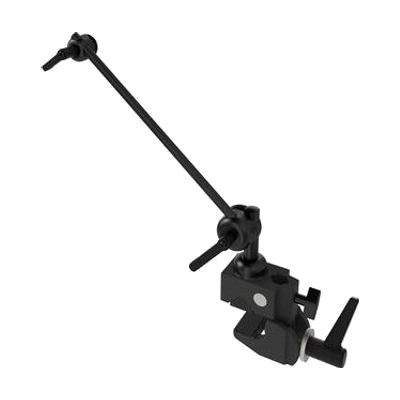
REHAdapt Mounting Arms
by REHAdapt
Price is what the vendor listed when last checked. Confirm it with the vendor before buying.
Last verified September 16, 2026 · classified April 26, 2026
What it is
Summary
AI-generated from vendor-published content · April 26, 2026
REHAdapt mounting arms are articulating mechanical arms designed to position communication devices, tablets, switches, or other assistive technology hardware precisely where a user needs them — at the right angle and distance, without requiring constant manual readjustment. The QuickShift lever system allows caregivers or users to reposition the arm quickly and lock it back in place, which is particularly useful for people who use wheelchairs or seating systems and need their device accessible throughout the day. These arms come in single, double, or triple configurations depending on how many joints and degrees of reach are needed for the specific mounting setup. This is a component, not a complete solution — you'll need a compatible base or clamp (attached to a wheelchair, desk, or floor stand) and a device holder or adapter plate that fits your specific tablet or AAC device.
Quick Facts Catalog facts · auto-generated
- AT Act lending
- Medicaid waiver
- Out of pocket
- School district
- Vocational rehab
What Setup Looks Like
- With a guide
- Identify the correct arm length and configuration (single, double, or triple) based on the device weight, required reach, and mounting location.
- Attach the arm to a compatible REHAdapt base or clamp using the appropriate interface connection.
- Mount the device holder or adapter plate to the arm's terminal end and secure the target device.
- Adjust each joint and lock using the QuickShift levers — allow 30–60 minutes for initial positioning and fine-tuning. See manufacturer support resources for detailed instructions.
- With professional help
- An assistive technology professional (ATP) or occupational therapist (OT) should assess the user's seating, reach, and positioning needs before selecting arm length and configuration.
- Wheelchair mounting requires measurement of tubing diameter and consideration of chair geometry — typically addressed in 1–2 sessions alongside seating/mobility evaluation.
Getting it
Try Before You Buy
Devices like this are often available to borrow through your state's AT Act program — typically free or low-cost — so you can try it before buying or pursuing funding.
Where to Get It
This is the vendor WhatCanHelp tracks for this product — it may also be available from other retailers or a local supplier, and prices vary.
Some links may be affiliate links — WhatCanHelp may earn a small commission from purchases at no extra cost to you. More on affiliates →
As an Amazon Associate we earn from qualifying purchases.
How to Fund This
Equipment like this is often pursued through official state programs. These are common starting points — each program decides its own eligibility and what it covers, so the first step is always a phone call.
Compare & explore
Sources & fine print
Vendor facts (name, price, platforms, vendor link) sourced from REHAdapt — view on vendor site; last verified September 16, 2026.
Classification & description AI-generated from vendor-published content on April 26, 2026 · confidence: high. Vendor specs may lag; verify before relying on details in a clinical or funding artifact.