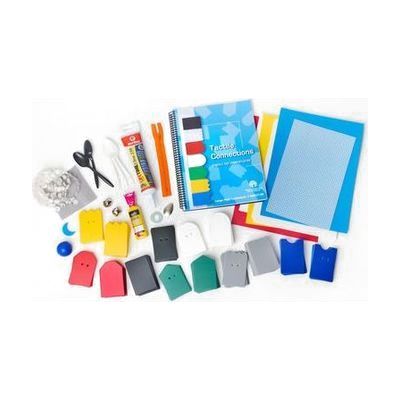
Tactile Connections: Symbols for Communication
by American Printing House for the Blind
Price is what the vendor listed when last checked. Confirm it with the vendor before buying.
Last verified September 17, 2026 · classified May 23, 2026
What it is
Summary
AI-generated from vendor-published content · May 23, 2026
Tactile Connections is a hands-on kit for building a tangible AAC system for learners who are both nonverbal and have significant visual impairments or deafblindness — situations where picture symbols simply don't work. The kit provides real objects, textured materials, and symbol supports that can be arranged into a low-tech communication display a learner can explore and activate by touch. This is a component system, not a ready-to-use device: an SLP, teacher of the visually impaired (TVI), or deafblind specialist needs to select, arrange, and introduce the symbols in a way that matches each learner's receptive abilities and communication goals. The system is intentionally customizable, which is its strength, but that also means meaningful results depend heavily on the professional putting it together and the consistency of how it's used across environments.
Quick Facts Catalog facts · auto-generated
- AT Act lending
- Medicaid waiver
- Out of pocket
- School district
What Setup Looks Like
- With a guide
- Review the included curriculum guide to understand symbol selection principles and communication display construction.
- Select tactile symbols that match the learner's sensory and cognitive level.
- Assemble and introduce the display following the guided activity sequence — allow 2–4 weeks for initial symbol familiarization with the learner.
- With professional help
- An SLP and/or Teacher of the Visually Impaired (TVI) should assess the learner's tactile discrimination, sensory preferences, and communication needs before selecting symbols.
- Ongoing collaboration between the SLP, TVI, and classroom team is needed to ensure consistent use across settings.
- See manufacturer support resources for detailed instructions.
Getting it
Try Before You Buy
Devices like this are often available to borrow through your state's AT Act program — typically free or low-cost — so you can try it before buying or pursuing funding.
Where to Get It
This is the vendor WhatCanHelp tracks for this product — it may also be available from other retailers or a local supplier, and prices vary.
Some links may be affiliate links — WhatCanHelp may earn a small commission from purchases at no extra cost to you. More on affiliates →
As an Amazon Associate we earn from qualifying purchases.
How to Fund This
Equipment like this is often pursued through official state programs. These are common starting points — each program decides its own eligibility and what it covers, so the first step is always a phone call.
Compare & explore
Sources & fine print
Vendor facts (name, price, platforms, vendor link) sourced from American Printing House for the Blind — view on vendor site; last verified September 17, 2026.
Classification & description AI-generated from vendor-published content on May 23, 2026 · confidence: high. Vendor specs may lag; verify before relying on details in a clinical or funding artifact.