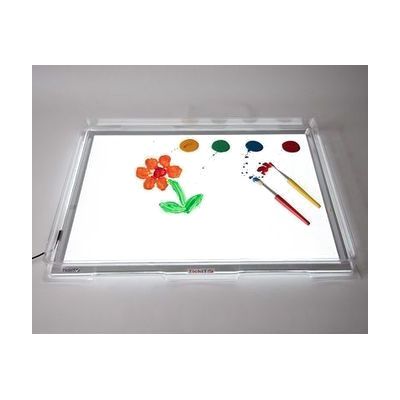
Sensa Light Panel and Cover Bundle
Last verified June 20, 2026 · classified June 9, 2026
What it is
Summary
AI-generated from vendor-published content · June 9, 2026
A large-format illuminated light panel (A2 size, roughly 25" x 18") paired with a deep thermoplastic cover that creates a contained workspace for activities directly on the panel surface. The bright LED backlight makes translucent and transparent materials glow vividly, which supports color exploration, pattern-making, tracing, and sensory play — the kind of activities used in sensory rooms, early intervention, and classrooms for children with developmental, visual, or sensory processing needs. Three brightness levels let you dial down intensity for light-sensitive users or crank it up for low vision work. This is a complete hardware bundle — panel plus cover — but accessories like colored pebbles, acetate sheets, and letter overlays are sold separately and are what make most activities actually work, so budget for those. The A2 footprint is substantial; it's more suited to a dedicated sensory room or classroom table than a small home workspace.
Quick Facts Catalog facts · auto-generated
- AT Act lending
- Medicaid waiver
- Out of pocket
- School district
What Setup Looks Like
- Out of the box
- Place the panel on a flat surface, attach the magnetic power connector, and switch on — illuminates immediately at the chosen brightness level.
- Set the cover over the panel to create a contained workspace for materials.
- With a guide
- Select translucent accessories (sold separately) appropriate for the learner's goals — color sorting, tracing, pattern work.
- Adjust the three light levels to find the right brightness for the user's visual and sensory needs.
- Allow 15–30 minutes to trial different activity types and brightness settings. See manufacturer support resources for detailed instructions.
- With professional help
- An occupational therapist or special education teacher can design structured activities targeting specific sensory, visual, or fine motor goals using the panel as a base.
- For children with significant sensory processing or low vision needs, consult an OT or vision specialist to calibrate brightness and activity type to the individual. Expect 1–2 planning sessions.
Getting it
Try Before You Buy
Devices like this are often available to borrow through your state's AT Act program — typically free or low-cost — so you can try it before buying or pursuing funding.
Where to Get It
Some links may be affiliate links — WhatCanHelp may earn a small commission from purchases at no extra cost to you. More on affiliates →
How to Fund This
Equipment like this is often pursued through official state programs. These are common starting points — each program decides its own eligibility and what it covers, so the first step is always a phone call.
Compare & explore
Sources & fine print
Vendor facts (name, price, platforms, vendor link) sourced from Inclusive Technology — view on vendor site; last verified June 20, 2026.
Classification & description AI-generated from vendor-published content on June 9, 2026 · confidence: high. Vendor specs may lag; verify before relying on details in a clinical or funding artifact.