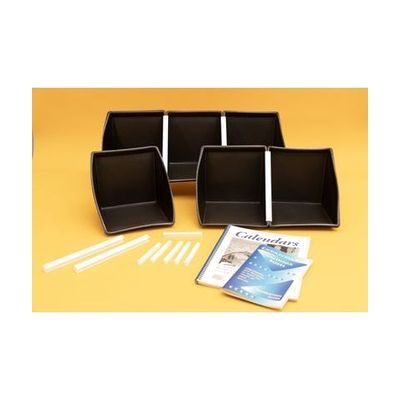
Expandable Calendar Boxes, Black
by American Printing House for the Blind
Last verified July 3, 2026 · classified July 6, 2026
What it is
Summary
AI-generated from vendor-published content · July 6, 2026
These modular calendar boxes create a tactile daily schedule system for students who communicate through touch and objects rather than pictures or words. Each box holds an object symbol representing an upcoming activity — a cup for snack time, a ball for gym — giving the student a concrete, hands-on way to understand what comes next in their day. The system is designed for children who are deafblind, have multiple disabilities, or are at early symbolic communication levels where picture-based schedules aren't yet meaningful. This is a component of a broader communication system, not a standalone solution — an educator, vision specialist, or SLP will need to select and consistently pair object symbols with routines for the system to work. The boxes expand to accommodate different object sizes, which is a practical advantage over fixed-size calendar systems.
Quick Facts Catalog facts · auto-generated
- AT Act lending
- Medicaid waiver
- Out of pocket
- School district
- Vocational rehab
What Setup Looks Like
- With a guide
- Arrange the boxes in a consistent location accessible to the student — at a table edge, wall-mounted, or on a stand.
- Identify meaningful object symbols for each daily routine (work with the student's team to select items the student can touch and recognize).
- Establish a 'checking the schedule' routine at the start of each transition — this typically takes 2–4 weeks of consistent practice to become functional.
- With professional help
- A teacher of students with visual impairments (TVI) or orientation and mobility specialist should help design the object symbol system and physical layout.
- An SLP familiar with early AAC and symbolic communication can guide the transition from object-level to higher symbolic levels over time.
- See manufacturer support resources for detailed instructions.
Getting it
Try Before You Buy
Devices like this are often available to borrow through your state's AT Act program — typically free or low-cost — so you can try it before buying or pursuing funding.
Where to Get It
Some links may be affiliate links — WhatCanHelp may earn a small commission from purchases at no extra cost to you. More on affiliates →
How to Fund This
Equipment like this is often pursued through official state programs. These are common starting points — each program decides its own eligibility and what it covers, so the first step is always a phone call.
Compare & explore
Sources & fine print
Vendor facts (name, price, platforms, vendor link) sourced from American Printing House for the Blind — view on vendor site; last verified July 3, 2026.
Classification & description AI-generated from vendor-published content on July 6, 2026 · confidence: high. Vendor specs may lag; verify before relying on details in a clinical or funding artifact.