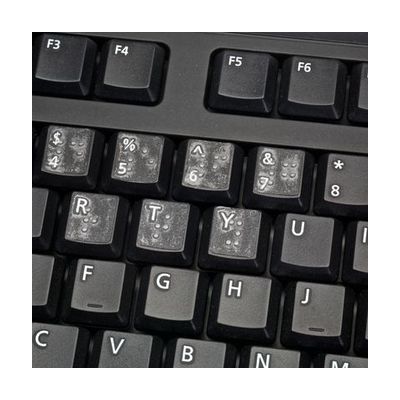
Transparent Braille Keyboard Stickers
by LS&S
Last verified June 18, 2026 · classified May 9, 2026
What it is
Summary
AI-generated from vendor-published content · May 9, 2026
Clear adhesive stickers that add braille cell characters to each key on a standard keyboard, letting a braille reader identify keys by touch without removing the printed letters underneath. They're designed for someone who is learning to type by feel or who uses braille as a tactile reference alongside sighted colleagues — the transparency means others sharing the keyboard can still read the standard key labels. You get 72 stickers covering letters, numbers, and most function keys, but the shifted symbols above the number row (!, @, #, etc.) are not included in braille or print on the stickers, so users who rely on those frequently may find that gap frustrating. These are a low-cost, low-tech addition to an existing keyboard — not a replacement for braille literacy instruction or a full refreshable braille display.
Quick Facts Catalog facts · auto-generated
- AT Act lending
- Out of pocket
- School district
- Vocational rehab
What Setup Looks Like
- Out of the box
- Clean keyboard keys thoroughly before applying stickers to ensure adhesion.
- Match each sticker to the correct key and press firmly into place — full set applies in roughly 15–30 minutes.
Getting it
Try Before You Buy
Devices like this are often available to borrow through your state's AT Act program — typically free or low-cost — so you can try it before buying or pursuing funding.
Where to Get It
Some links may be affiliate links — WhatCanHelp may earn a small commission from purchases at no extra cost to you. More on affiliates →
How to Fund This
Equipment like this is often pursued through official state programs. These are common starting points — each program decides its own eligibility and what it covers, so the first step is always a phone call.
Compare & explore
Sources & fine print
Vendor facts (name, price, platforms, vendor link) sourced from LS&S — view on vendor site; last verified June 18, 2026.
Classification & description AI-generated from vendor-published content on May 9, 2026 · confidence: high. Vendor specs may lag; verify before relying on details in a clinical or funding artifact.