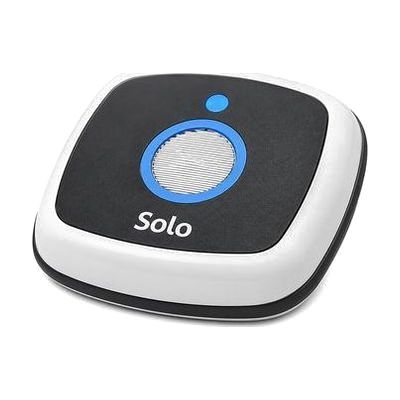
Solo Touch Switch
Last verified June 20, 2026 · classified May 9, 2026
What it is
Summary
AI-generated from vendor-published content · May 9, 2026
A Bluetooth switch designed for people who have very limited motor control — think someone who can apply only a light touch or slight pressure but not a full press. The Solo Touch responds to minimal contact, making it suitable for hand, finger, or even cheek activation depending on placement and the user's abilities. Because it's Bluetooth, it pairs wirelessly with tablets, computers, and phones running switch-accessible apps or settings, without needing a wired interface box. Choosing the right switch and configuring scanning on the target device almost always benefits from guidance from an occupational therapist or ATP, and activation sensitivity may need fine-tuning to prevent accidental triggering.
Quick Facts Catalog facts · auto-generated
- AT Act lending
- Medicaid waiver
- Out of pocket
- School district
- Vocational rehab
What Setup Looks Like
- Out of the box
Power on the switch and activate Bluetooth pairing mode. - With a guide
- Pair the switch to your tablet, phone, or computer via Bluetooth settings.
- Enable switch access in the operating system (e.g., iOS Switch Control, Android Switch Access) and assign the switch to a scan action — allow 30–60 minutes for initial configuration. See manufacturer support resources for detailed instructions.
- With professional help
- An occupational therapist (OT) or assistive technology professional (ATP) assesses optimal placement site and activation sensitivity for the user's motor profile.
- Expect 1–3 sessions to trial placement, calibrate sensitivity, and integrate with the user's AAC or access setup.
Getting it
Try Before You Buy
Devices like this are often available to borrow through your state's AT Act program — typically free or low-cost — so you can try it before buying or pursuing funding.
Where to Get It
Some links may be affiliate links — WhatCanHelp may earn a small commission from purchases at no extra cost to you. More on affiliates →
How to Fund This
Equipment like this is often pursued through official state programs. These are common starting points — each program decides its own eligibility and what it covers, so the first step is always a phone call.
Compare & explore
Sources & fine print
Vendor facts (name, price, platforms, vendor link) sourced from Inclusive Technology — view on vendor site; last verified June 20, 2026.
Classification & description AI-generated from vendor-published content on May 9, 2026 · confidence: medium. Vendor specs may lag; verify before relying on details in a clinical or funding artifact.