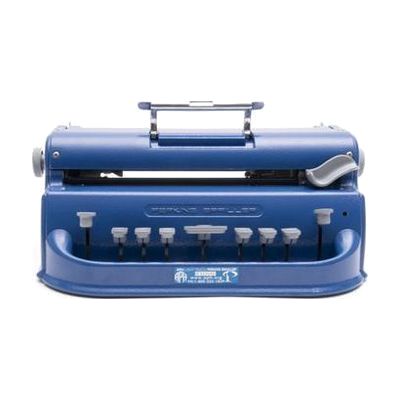
APH Light-Touch Perkins Brailler®
by American Printing House for the Blind
Price is what the vendor listed when last checked. Confirm it with the vendor before buying.
Last verified September 17, 2026 · classified May 23, 2026
What it is
Summary
AI-generated from vendor-published content · May 23, 2026
The APH Light-Touch Perkins Brailler is a mechanical braille writer built on the classic Perkins design, modified so the keys require significantly less finger force to actuate than a standard Brailler. It produces embossed braille on paper using the traditional six-key chord input method, where you press combinations of keys simultaneously to form braille cells. This is a strong fit for braille users — students, adults, or people with low vision — who have limited hand strength, fine motor fatigue, or conditions like arthritis that make standard Brailler key resistance painful or impractical. The machine is a complete standalone solution: load paper, press keys, produce braille — no software, power source, or additional hardware needed. Standard Perkins Braillers are notorious for stiff keys that can discourage new learners and fatigue experienced users; the light-touch mechanism meaningfully reduces that barrier, but the machine is still heavier and bulkier than electronic or electronic-to-emboss alternatives.
Quick Facts Catalog facts · auto-generated
- AT Act lending
- Medicaid waiver
- Out of pocket
- School district
- Vocational rehab
What Setup Looks Like
- Out of the box
- Load braille paper into the carriage following the paper guide.
- Set margins using the margin stops, then begin typing braille using the six-key chord layout.
- With professional help
- A teacher of the visually impaired (TVI) or braille specialist should confirm the user knows braille code and proper key-chord technique before independent use.
- For new braille learners, expect multiple sessions over several weeks to develop fluency — a TVI can integrate the Brailler into formal braille literacy instruction.
Getting it
Try Before You Buy
Devices like this are often available to borrow through your state's AT Act program — typically free or low-cost — so you can try it before buying or pursuing funding.
Where to Get It
This is the vendor WhatCanHelp tracks for this product — it may also be available from other retailers or a local supplier, and prices vary.
Some links may be affiliate links — WhatCanHelp may earn a small commission from purchases at no extra cost to you. More on affiliates →
As an Amazon Associate we earn from qualifying purchases.
How to Fund This
Equipment like this is often pursued through official state programs. These are common starting points — each program decides its own eligibility and what it covers, so the first step is always a phone call.
Compare & explore
Sources & fine print
Vendor facts (name, price, platforms, vendor link) sourced from American Printing House for the Blind — view on vendor site; last verified September 17, 2026.
Classification & description AI-generated from vendor-published content on May 23, 2026 · confidence: high. Vendor specs may lag; verify before relying on details in a clinical or funding artifact.