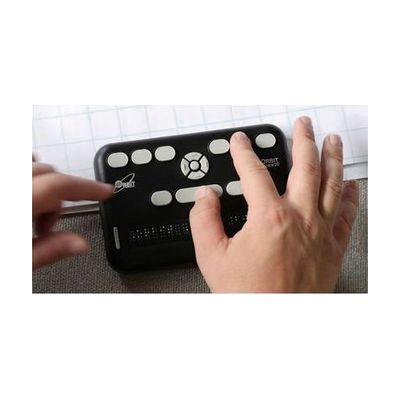
Orbit Reader 20
Price is what the vendor listed when last checked. Confirm it with the vendor before buying.
Last verified September 18, 2026 · classified July 16, 2026
What it is
Summary
AI-generated from vendor-published content · July 16, 2026
The Orbit Reader 20 is a 20-cell refreshable braille display that also functions as a standalone book reader and basic note-taker — three distinct use cases in one device. Blind or deafblind users who read braille can use it independently with an SD card loaded with BRF files, or pair it via Bluetooth or USB to a phone or computer to get braille output from any compatible screen reader (NVDA, JAWS, VoiceOver, TalkBack, and others). The price point is notable — Orbit Research uses a different cell manufacturing approach that puts this well below the cost of most 20-cell displays, making it a realistic option for students, families, and programs with limited budgets. That cost-saving approach does produce a somewhat different tactile feel than traditional piezoelectric cells, which some experienced braille readers notice immediately; if possible, trying it before committing is worth the effort. Comes ready to pair out of the box, though getting the most from the note-taking and multi-device Bluetooth pairing features benefits from some time with the manual.
Quick Facts Catalog facts · auto-generated
- AT Act lending
- Out of pocket
- School district
- Vocational rehab
What Setup Looks Like
- Out of the box
Insert an SD card with BRF or text files and use the built-in navigation buttons to read immediately — no computer needed. - With a guide
- Enable Bluetooth on your phone or computer, pair the Orbit Reader 20 as a Bluetooth HID device.
- Enable your screen reader (VoiceOver, TalkBack, NVDA, JAWS, etc.) and verify braille output is routed to the display.
- Review the user manual for SD card file formatting, multi-device pairing, and note-taker functions — expect 30–60 minutes for full configuration. See manufacturer support resources for detailed instructions.
Getting it
Try Before You Buy
Devices like this are often available to borrow through your state's AT Act program — typically free or low-cost — so you can try it before buying or pursuing funding.
Where to Get It
This is the vendor WhatCanHelp tracks for this product — it may also be available from other retailers or a local supplier, and prices vary.
Some links may be affiliate links — WhatCanHelp may earn a small commission from purchases at no extra cost to you. More on affiliates →
As an Amazon Associate we earn from qualifying purchases.
How to Fund This
Equipment like this is often pursued through official state programs. These are common starting points — each program decides its own eligibility and what it covers, so the first step is always a phone call.
Compare & explore
Sources & fine print
Vendor facts (name, price, platforms, vendor link) sourced from Orbit Research — view on vendor site; last verified September 18, 2026.
Classification & description AI-generated from vendor-published content on July 16, 2026 · confidence: high. Vendor specs may lag; verify before relying on details in a clinical or funding artifact.