Browse Assistive Technology
Products
-
Orca Screen Reader
Free
Orca is a free, open-source screen reader for Linux desktops that use GNOME. It reads what is on the screen aloud, can send text to a braille display, and can enlarge the screen, so someone who is blind or has low vision can work on their computer. It comes built into most Linux distributions, including Ubuntu, Fedora, and Debian. You'll want to learn your desktop's own navigation commands too, since Orca works alongside them.
Verified 4 days agoSetup with instructions -

Windows Narrator
Free
Narrator is the screen reader that comes built into Windows 11, so there is nothing to download or install. It reads aloud what is on the screen, which lets someone who can't see the display use apps, browse the web, and move around Windows. You can adjust how fast it speaks and how loud it is, and it has a scan mode for moving through apps, email, and web pages. Microsoft publishes a full guide to Narrator, in Word and PDF versions in English, plus separate how-to articles for the Start menu, Settings, File Explorer, Office apps, and Teams. Screen readers take practice, so plan on some time with the guide before it feels natural.
Verified 3 days agoSetup with instructions -
ChromeVox
Free
ChromeVox is the screen reader built into ChromeOS. It reads what is on a Chromebook screen out loud, so someone who can't see the display well can still move through apps, menus, and web pages. It comes with the Chromebook, so there is nothing to buy or install. Chromebook accessibility settings can sync across your devices when you sign in to your Google Account, which saves you from setting them up again on a new machine or after a reset. The page for this product mostly covers Chromebook accessibility settings in general, so check the ChromeVox help pages for the exact keyboard commands and options.
Verified 3 days agoSetup with instructions -
JAWS Home
$104.50 every year
JAWS Home is a screen reader for Windows PCs that reads on-screen content aloud and can send it to a braille display, so someone who can't see the screen or use a mouse can still work in their applications. It runs entirely from the keyboard. This is the home-use edition, priced as a per-user software license rather than a workplace or network package.
Verified 4 days agoProfessional guidance helps -
NVDA (NonVisual Desktop Access)
Free
NVDA is a free screen reader for Windows. It reads aloud what is on the screen so someone who is blind or has low vision can use the operating system and many other programs. It installs quickly and can also run from a USB stick, which helps if you need to use a computer that isn't your own. It comes in many languages, and an active user community builds add-ons that extend what it can do. Screen readers take practice to use well, so plan on some learning time even though the software itself is simple to get.
Verified 4 days agoSetup with instructions -
TalkBack
Free
TalkBack is the screen reader built into Android devices. It speaks what is on the screen aloud, so someone who can't see the display well can control the phone or tablet without looking at it. It is meant for people who are blind or have low vision. When you turn it on for the first time, a tutorial opens to teach the gestures, and you can reopen it later. Exact steps and some gestures vary by device maker, Android version, and TalkBack version.
Verified 3 days agoSetup with instructions -
JAWS Professional
$1,003 every year
JAWS is screen reader software for Windows that reads on-screen content aloud and can send it to a braille display, so someone who can't see the screen or use a mouse can work in their applications from the keyboard. It's built for people with significant vision loss, including blind users who depend on it for daily computer use. The Professional edition is the workplace-oriented licence. It is software only, and anyone who wants braille output will need to add a compatible display.
Verified 4 days agoProfessional guidance helps -

VoiceOver
Free
VoiceOver is the screen reader built into Apple devices. It speaks what's on the screen out loud, sends it to a braille display, or does both, so someone who can't see the screen can still use their device. You move around with gestures on a touchscreen or trackpad, or with a Bluetooth keyboard. You can adjust the voice, speaking speed, how much detail it gives, and the sounds and haptic (vibration) feedback. It can also describe images and screen elements, even in apps and web pages that don't label them, and it can describe things the camera sees, like people, doors, text, and furniture. Some features are not offered in every region or language.
Verified 3 days agoSetup with instructions -
Fusion Home
$187 every year
Windows software that combines the ZoomText screen magnifier with the JAWS screen reader in a single install. Someone whose vision changes over time, or who uses magnification some days and speech on others, can move between enlarged, enhanced visuals and spoken output without switching programs. This is the Home edition, a personal-use license, so it suits an individual at home rather than a workplace deployment.
Verified 4 days agoProfessional guidance helps -
Fusion Professional
$1,412 every year
Windows software that pairs the ZoomText screen magnifier with the JAWS screen reader in one installation. Someone whose vision changes over time, or who wants to see enlarged text on screen and also hear it read aloud, can move between the two modes without running separate programs. It is aimed at a wide range of vision loss, from low vision through blindness. This is the Professional license, which is priced for individual and workplace use.
Verified 4 days agoProfessional guidance helps -
Orbit Reader 40 Braille Display Book Reader
$1,899.00
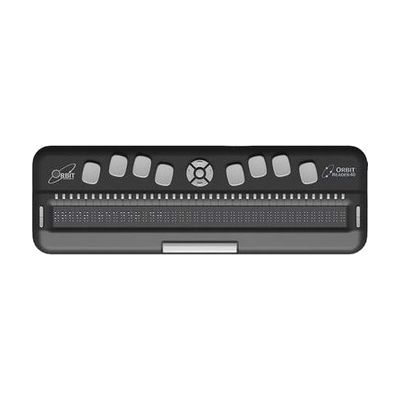
The Orbit Reader 40 is a portable braille device with 40 eight-dot refreshable cells that raise and lower to show text one line at a time. It works three ways: as a stand-alone book reader for files on an SD card or USB drive, as a note-taker with a Perkins-style 8-key braille keyboard, or as a braille display that connects to up to 5 computers and phones over USB or Bluetooth. It works with the popular screen readers on Windows, Mac, iOS, Android, Fire OS, Chrome OS and Linux. Cursor routing buttons, a 4-way cursor pad and panning keys at each end of the display handle navigation. It also has a clock and alarm, calendar and calculator, with braille translation in more than 40 languages. It's best for someone who already reads braille, and you'll need a screen reader on each device you connect.
Verified 2 days agoSetup with instructions -
Orbit Reader 20
$799.00
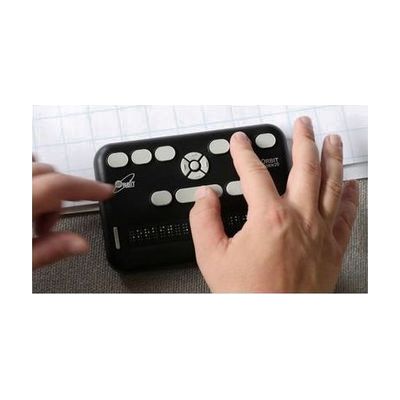
The Orbit Reader 20 is a small refreshable braille device with 20 eight-dot cells that does three jobs. On its own, it reads books and files from an SD card (BRF, BRL, or text) and works as a note-taker using its Perkins-style 8-key braille keyboard. Connected to a computer, phone, or tablet by USB or Bluetooth, it becomes a braille display for a screen reader, so you can read and send messages, check email, and browse the web. It works with common screen readers on Windows, Mac, iOS, Android, and Chrome, and weighs under a pound. Twenty cells show only a short line of braille at a time, so you pan through longer text with the navigation keys.
Verified todaySetup with instructions -
Orbit Reader 40
$1,899.00
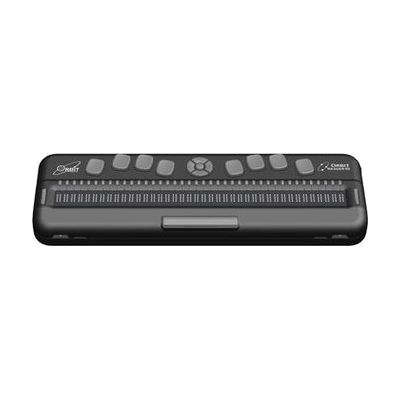
The Orbit Reader 40 is a refreshable braille device with 40 eight-dot braille cells. You can use it on its own to read books and documents in braille and to take notes, saving them as braille or text files. It also connects by USB or Bluetooth to a computer or smartphone, where it acts as a braille display for web browsing, email, and texting with a screen reader. It has braille input keys, cursor routing buttons, and rocker keys for moving through text. A clock and alarm, calendar, and calculator are built in, and files can be stored on an SD card. Learning the controls and pairing it with your other devices takes some practice, so a vision professional or braille teacher can help you get the most from it.
Verified todayProfessional guidance helps -
Orbit Reader 20 Plus
$899.00
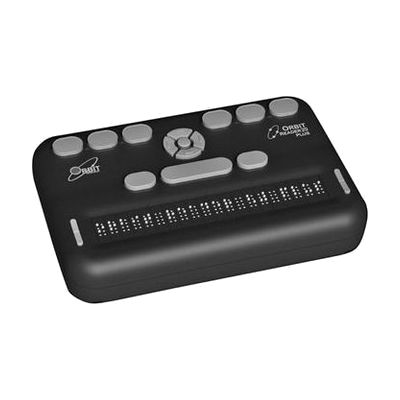
The Orbit Reader 20 Plus is a 20-cell, eight-dot braille device that works three ways. You can use it by itself as a note-taker or book reader, or connect it to a computer or phone by USB or Bluetooth and use it as a braille display for a screen reader. It translates text into braille and back again on the device, with support for 40+ languages. It also has a clock and alarm, a calendar, and a calculator. It has eight braille input keys, panning keys at each end of the display, an SD-card slot, and a rechargeable battery. It's a good fit for someone who already reads braille and wants one portable tool for notes, books, email, and web browsing. The connected-device features work with Android, iOS, Windows, Fire OS, Chrome, and Linux.
Verified todaySetup with instructions -

FS Student Suite
$225 every year
The FS Student Suite is a one-year license for students who need to see or hear their computer screen. It lets you install JAWS (a screen reader that reads the screen aloud), ZoomText (screen magnification), or Fusion, which combines the two. The license covers every upgrade and update released during the license term, so the software stays current for the school year. This is a software license only, so you'll need a Windows computer to run it, and the license runs for one year.
Verified 4 days agoSetup with instructions -

Apple Zoom
Free
Zoom is the built-in screen magnifier on Apple devices. It enlarges what's on the screen so small text and images are easier to see. You can magnify the whole screen, or use Window Zoom to enlarge just one area with a lens you can resize. Follow Focus keeps the magnified view on whatever you select or type. Smart Typing enlarges the text area while leaving the keyboard at normal size. Color filters (inverted, grayscale, grayscale inverted, and low light) can make the magnified area more comfortable to read. Zoom works together with VoiceOver, Apple's screen reader, so you can see and hear the screen at once. On Mac you can split the screen to view content up close and far away at the same time, and set a separate zoom level for each display. On Apple Vision Pro, Zoom can also magnify your surroundings through the headset's camera. Zoom is a software feature, so you need a supported Apple device, and each device has its own settings to learn.
Verified 3 days agoSetup with instructions -
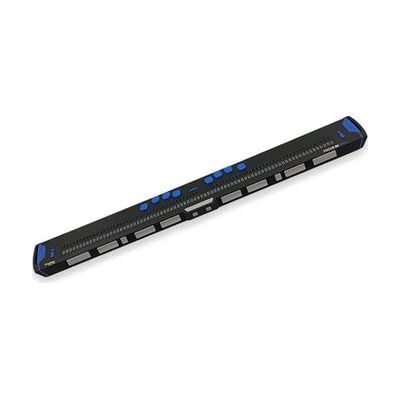
Focus 80 Blue - 5th Generation
The Focus 80 Blue is a portable braille display that lets you read on-screen text as refreshable braille, using 80 braille cells (the 80 in its name). The housing is aluminum over a steel base, with shock-absorbing bumpers meant to handle drops and knocks, and a single smooth cap over the cells so your fingers feel only the pins. The dot keys and spacebar are built for smooth, quiet typing, so you can also use it to enter text. It's for someone who reads braille and wants a durable display to carry between home, school, and work. It is a display only, so you'll need a computer or phone running screen reader software to send text to it.
Verified 4 days agoSetup with instructions -

Galaxy S26 Ultra
Est. $1,199–$1,399
The Galaxy S26 Ultra is a mainstream Android smartphone with a long list of accessibility tools built into the phone itself. For vision, it has the TalkBack screen reader, magnification, and color adjustment. For hands-free or limited-movement use, it has Voice Access, Bixby voice control, switch scanning through Universal Switch, and an on-screen Assistant Menu that stands in for hardware buttons and gestures. For hearing, it adds Live Transcribe and Live Caption for text of speech, sound detectors for things like a doorbell or a crying baby, and Bluetooth hearing aid support. The tools are powerful but spread across many settings menus, so someone will need to choose which ones fit and tune them, and a person new to a screen reader or switch scanning will need time to learn them.
Verified 4 days agoSetup with instructions -
Amazon Fire Tablet
$139.99
The Amazon Fire Tablet is a low-cost tablet with built-in accessibility tools. These include the VoiceView screen reader, a screen magnifier, adjustable font size, and color inversion. It also has an Alexa hands-free mode, so someone can give voice commands instead of tapping. Families often use a tablet like this to run AAC apps (apps that speak for a person), read, and watch media on a small budget. Show Mode can also turn it into a smart display that looks and works like an Echo Show. The tablet is only the hardware: any AAC app or other tool you want to run on it is a separate choice.
Verified 1 week agoSetup with instructions -
Equatio
$179 every year
Equatio lets you put math on the screen without fighting a keyboard. You can speak an equation, write it by hand, type it in an equation editor that predicts what you're building, or enter LaTeX (a typesetting code for math). It also includes a Screenshot Reader, which picks up math from an image. It can make alt-text for math, so screen reader users can follow equations, and it has a Google Forms creator for building math questions. This is a good fit for students or teachers who find typing math slow, hard on the hands, or hard to see.
Verified 4 days agoSetup with instructions -
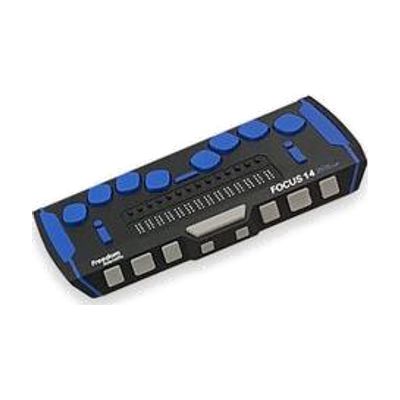
Focus 14 Blue - 5th Generation
The Focus 14 Blue is a portable braille display that shows 14 characters of braille at a time, so you can read what's on a screen by touch. It has an 8-dot braille keyboard for typing, front panel controls, and customizable NAV rockers for moving around. You can switch between five Bluetooth devices and one USB connection, and it works with iOS and Android devices. With JAWS, it also gives contracted braille input and full control in Windows. The housing is aluminum and steel, and it can be used while still in its carrying case. This is a display that goes with a screen reader, so it only works alongside a phone, tablet, or computer.
Verified 4 days agoProfessional guidance helps -
(Louis) Journeys, 1.1 (E-File)
$37.00
This is an electronic-file version of the book Journeys, 1.1, which comes from the Louis Database of accessible educational materials. It's made for a student who reads in an alternative format rather than standard print. The file format means you'll need a device and software that can open it, such as a braille display or screen reader, before it's useful.
Verified 3 days agoSetup with instructions -
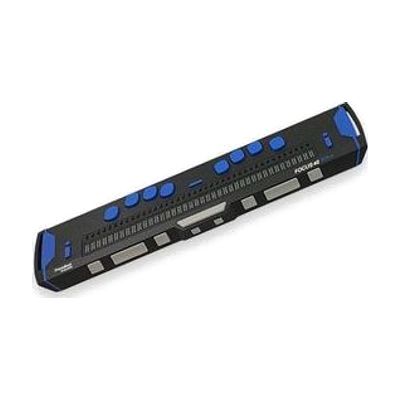
Focus 40 Blue - 5th Generation
The Focus 40 Blue is a portable braille display with 40 cells. It raises and lowers pins to show what's on a computer or phone screen as braille, so someone who reads braille can follow text by touch. It's built tough, with an aluminum housing on a steel base, bumpers that absorb knocks, and drop testing to a US military standard. A single smooth cap covers the cells so you feel only the pins, and the dot keys and spacebar are made to feel smooth and run quietly. The name points to Bluetooth, and the vendor notes that iOS connection needs iOS 11. You'll need a screen reader on your computer or phone for it to have anything to show.
Verified 4 days agoSetup with instructions -

BrailleNote evolve: KeySoft on Windows 11
The BrailleNote evolve is a braille notetaker that runs two environments on one device: HumanWare's KeySoft, built for reading and writing in braille, and Windows 11 Pro. It comes with the NVDA screen reader and Microsoft 365, so someone who is blind can write, read, and work on shared documents using braille. You get a notetaker and a Windows computer in one dedicated device, which suits a student or worker who needs to use mainstream software without sight. Choosing it well takes some thought, because it replaces more than one device and the best fit depends on how the person already works.
Not recently verifiedProfessional guidance helps