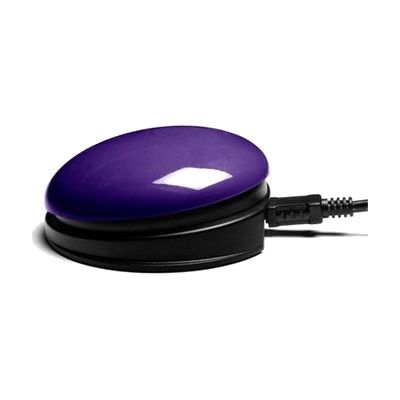
Plug and Play USB Switch
Last verified June 20, 2026 · classified April 26, 2026
What it is
Summary
AI-generated from vendor-published content · April 26, 2026
This is a USB-connected switch that sends mouse click or keyboard signals to a computer without requiring any driver installation — you connect it to a Windows PC, Mac, or Chromebook and it's recognized immediately. It's designed for people who can't use a standard keyboard or mouse due to conditions that affect movement, including tremors, ataxia, or limited hand control, and it includes built-in settings to filter out unintentional activations caused by involuntary movement. The device has a 75mm activation area and two 3.5mm sockets on the side, so you can daisy-chain additional external switches rather than replacing this one. One important thing to know: the switch functions and advanced timing settings are configured through a small on-device LED display, which may require some trial and error to dial in — this isn't truly plug-and-play for users with complex motor profiles, even though the USB connection itself needs no setup.
Quick Facts Catalog facts · auto-generated
- AT Act lending
- Medicaid waiver
- Out of pocket
- School district
- Vocational rehab
What Setup Looks Like
- Out of the box
- Plug the USB cable into a PC, Mac, or Chromebook — no driver installation needed.
- Press the switch to confirm it registers as a click or keypress on the connected device.
- With a guide
- Use the built-in LED display to cycle through available switch functions (e.g., left click, space bar, mouse movement).
- Adjust timing and filtering settings for tremor or ataxia compensation using the on-device menu — allow 20–30 minutes to explore settings with the product documentation.
- If connecting additional switches, plug 3.5mm switches into the two side sockets and confirm each is recognized. See manufacturer support resources for detailed instructions.
- With professional help
- An occupational therapist (OT) or assistive technology professional (ATP) can assess which switch function mapping and motor filtering settings best match the user's movement profile.
- Integration with switch-accessible software (scanning AAC apps, switch games, computer access) typically requires 1–2 sessions with an ATP to configure and test.
Getting it
Try Before You Buy
Devices like this are often available to borrow through your state's AT Act program — typically free or low-cost — so you can try it before buying or pursuing funding.
Where to Get It
Some links may be affiliate links — WhatCanHelp may earn a small commission from purchases at no extra cost to you. More on affiliates →
As an Amazon Associate we earn from qualifying purchases.
How to Fund This
Equipment like this is often pursued through official state programs. These are common starting points — each program decides its own eligibility and what it covers, so the first step is always a phone call.
Compare & explore
Sources & fine print
Vendor facts (name, price, platforms, vendor link) sourced from Inclusive Technology — view on vendor site; last verified June 20, 2026.
Classification & description AI-generated from vendor-published content on April 26, 2026 · confidence: high. Vendor specs may lag; verify before relying on details in a clinical or funding artifact.